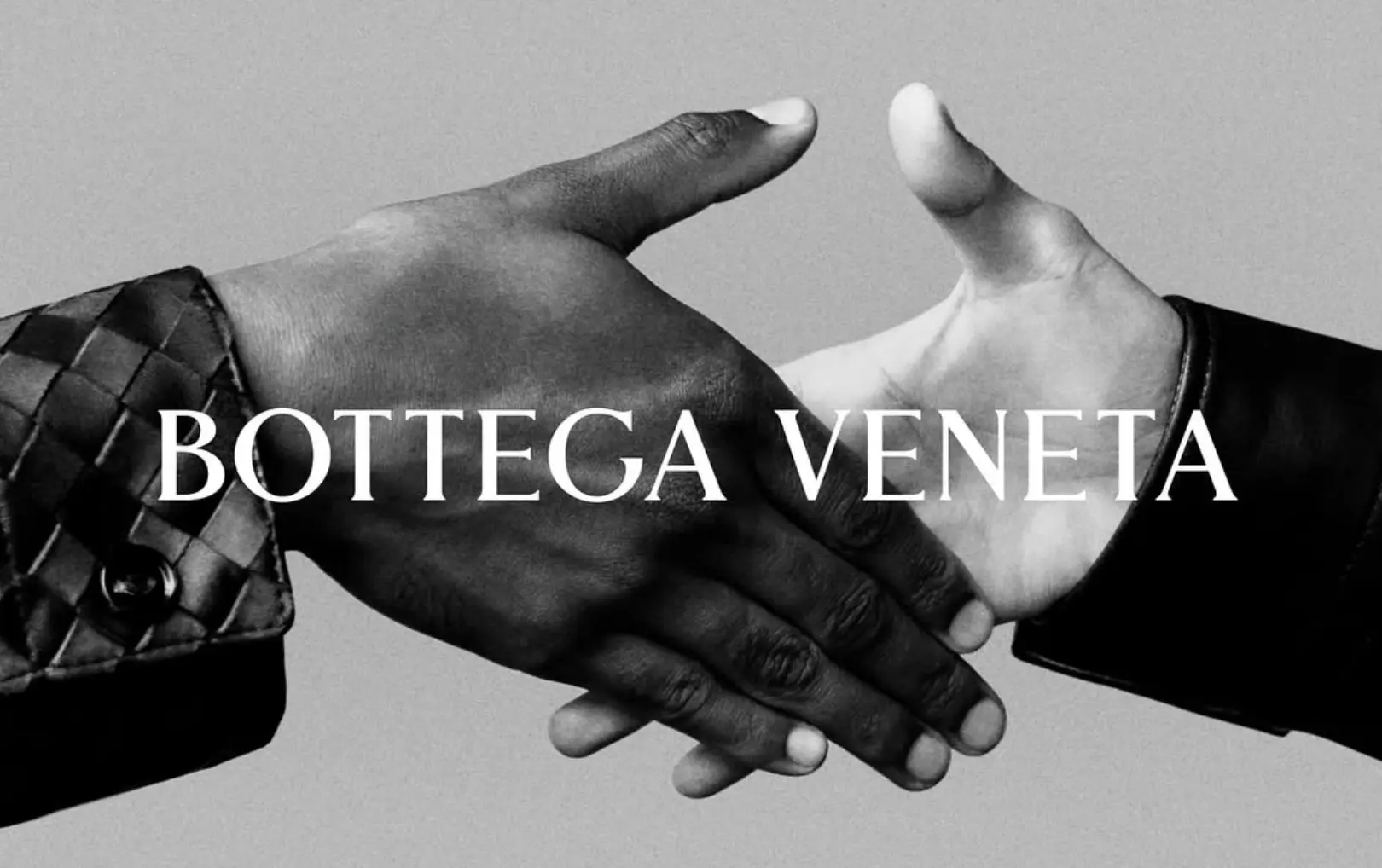
Bottega Veneta’s marketing strategy is built around a simple tension: the brand stays visually restrained while making the product, craft, and customer experience do more of the talking. In 2025, that approach stood out inside a difficult luxury market. The useful lesson for 2026 is not that every brand should become quieter. It is that visibility works better when the product and the brand codes are distinctive enough to carry it.
For other companies, the transferable idea is consistency. A minimalist visual identity only works when materials, product design, photography, retail, service, and messaging reinforce the same point of view. Brand Vision, a branding agency, approaches that problem as a system rather than a styling exercise.
At a glance
- Bottega Veneta generated €846 million in H1 2025 revenue, up 2% on a comparable basis, while directly operated retail sales rose 3%.
- The house continued to emphasize Intrecciato, construction, materials, and aftercare rather than visible logo repetition.
- Bottega remained largely absent from its own mainstream social feeds, relying on owned media, editorial coverage, ambassadors, events, and organic circulation.
- Louise Trotter was appointed Creative Director in December 2024 and joined at the end of January 2025, with Kering emphasizing her approach to craftsmanship.
- Kering’s H1 2026 update said Bottega Veneta outperformed again, with leather goods supporting stronger momentum, but public results still do not isolate marketing as the cause.
How to read Bottega’s 2025 playbook
The strongest way to read Bottega Veneta’s strategy is to separate brand evidence from causal claims. Analyses of its “anti-marketing” approach describe a preference for controlled media, events, ambassadors, and selective visibility rather than a constant owned social feed (Troy Digital). Kering’s financial reporting, meanwhile, shows that Bottega performed better than many parts of the group during 2025. Existing coverage of the Certificate of Craft also connects craft, aftercare, and differentiation (Culted).
Those two facts can sit beside one another without pretending that one directly caused the other. Craft, product desirability, distribution, pricing, retail execution, creative direction, and customer experience all contribute to performance. Structured brand research can help other companies distinguish which of their own brand codes customers actually value before they simplify communication.
Quiet luxury without turning quietness into a formula
Bottega has often been grouped with quiet luxury because it uses few overt logos and places more emphasis on material, silhouette, and construction. FashionNetwork described the house as a comparatively strong performer within Kering during the luxury slowdown (FashionNetwork). Existing commentary on quiet-luxury retail also emphasizes slower, more deliberate customer experiences .
- Quiet luxury is useful here as a description of subtlety, material quality, and low-logo signaling rather than as a guaranteed growth strategy.
- Bottega’s restraint works because the product still contains recognizable codes.
- The broader lesson is to reduce noise only after the brand has something distinctive to repeat.
Craftsmanship as the hero
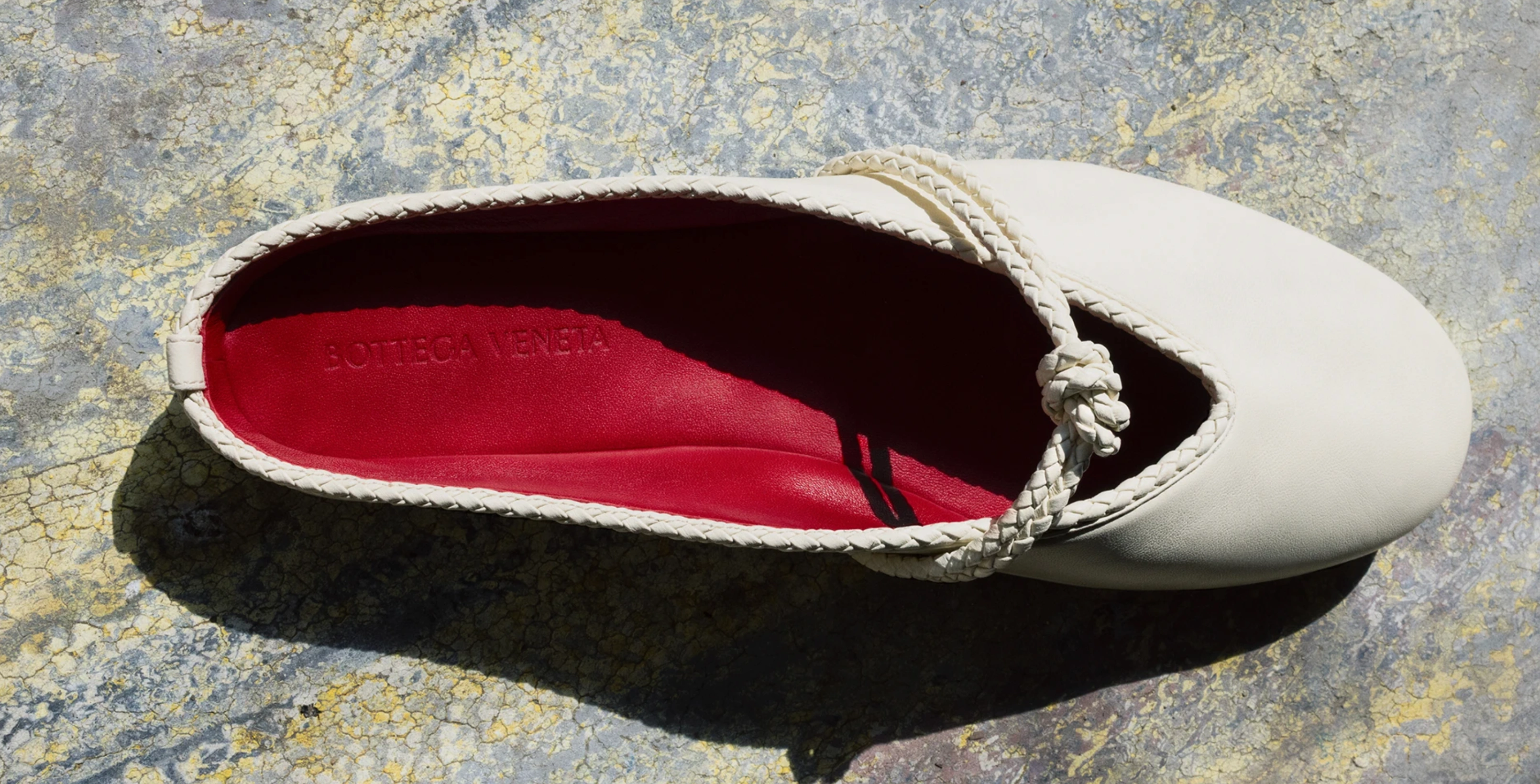
When logos are reduced, the product has to carry more of the story. Bottega’s Intrecciato leather, trompe-l’oeil effects, tailoring, and construction techniques give the house tangible material to communicate. Existing coverage of the Certificate of Craft connects aftercare with the brand’s craftsmanship story (Culted). Vogue has also examined the growing importance of craft in luxury and Bottega’s investment in protecting technical knowledge (Vogue).
Bottega’s own Certificate of Craft is more specific than the phrase “lifetime care for every bag.” The current program offers complimentary care services on selected eligible products, with product-specific terms and activation requirements (Bottega Veneta). That makes the service a concrete expression of long-term product stewardship without implying universal coverage across the entire assortment.
Minimal imagery, recognizable codes
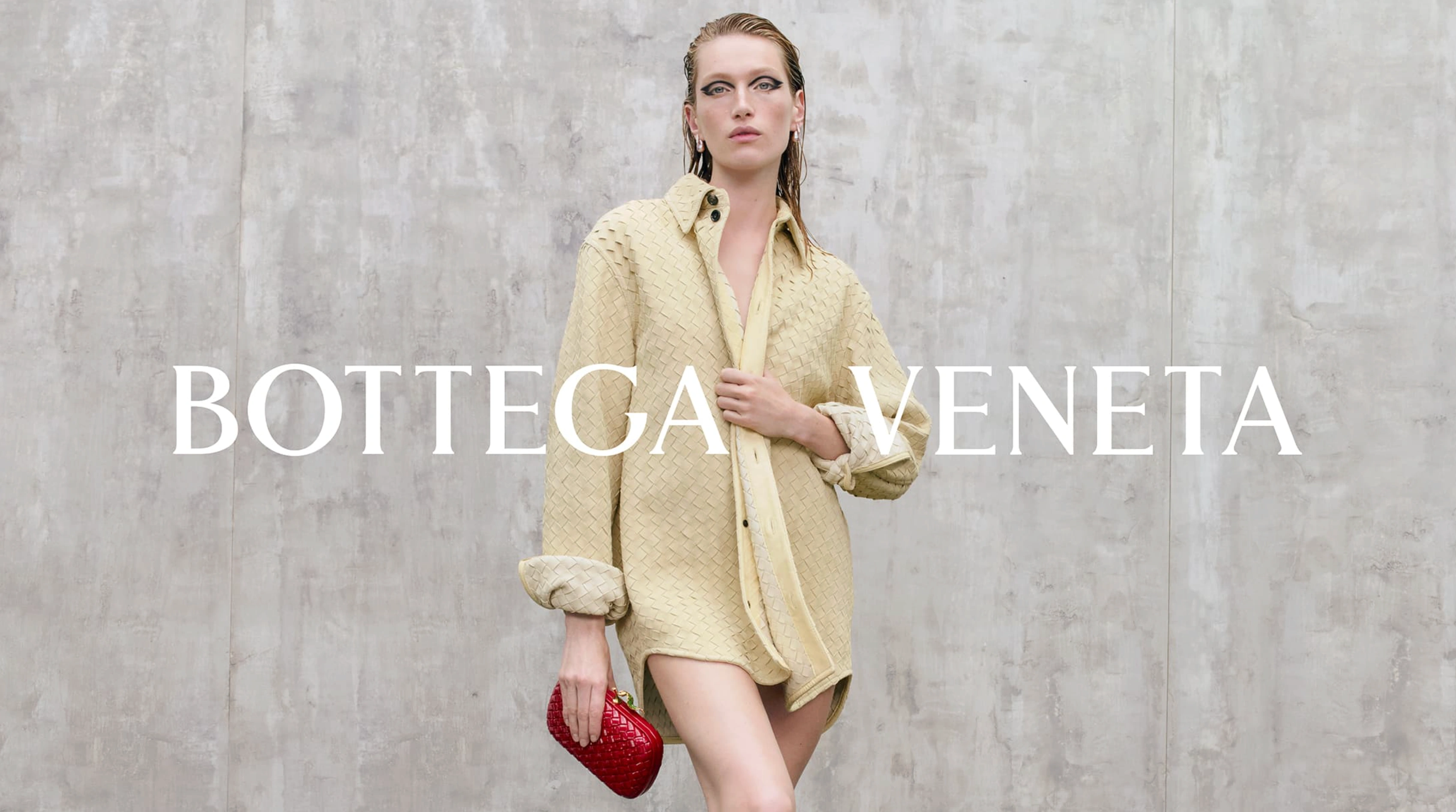
Bottega’s campaigns often reduce the number of competing signals and put more attention on color, texture, shape, and product detail. Existing Vogue coverage emphasizes the growing importance of material and craft in luxury (Vogue). The strategic value is not minimalism by itself. It is the ability to make a small set of visual and material cues recognizable enough that the brand does not need a large logo in every frame.
- Color, texture, silhouette, and construction can function as recognition devices.
- Negative space and restrained layouts work best when the product is distinctive enough to hold attention.
- Minimalism is a presentation choice, not a substitute for a strong product.
Marketing without an owned social feed
Bottega Veneta deleted its Instagram, Facebook, and Twitter accounts in 2021. The Guardian reported that the brand replaced regular social posting with a quarterly digital journal called Issue (The Guardian), while Vogue documented the journal and the brand’s alternative approach to digital publishing (Vogue). More recent Vogue coverage has continued to describe Bottega as operating without its own account while benefiting from celebrity, editorial, and organic social circulation.
That makes the strategy selective rather than absent. Bottega still appears online through fashion media, ambassadors, customers, paparazzi campaigns, retailers, search, and its own website. The lesson is not to abandon social media. It is to decide which channels the brand truly needs to own and which can work through earned distribution.

Performance in a soft luxury market
Kering’s first-half 2025 report put Bottega Veneta revenue at €846 million, up 1% as reported and 2% on a comparable basis. Sales from directly operated physical and online stores rose 3% comparable, and North America increased 18% comparable in the retail and e-commerce view. Wholesale revenue declined 3%. (Kering) The Fashion Law also documented the difficult group environment around those results (The Fashion Law).
The results show resilience relative to much of the group, but they do not prove that quiet imagery or craft messaging caused the growth. Kering itself pointed to product, desirability, the customer experience, and distribution execution. That distinction matters for marketers who want to learn from the brand rather than turn one correlation into a formula.
The pattern also continued into 2026. Kering’s H1 2026 update said Bottega Veneta outperformed again and highlighted leather goods as a support for stronger momentum (Kering H1 2026). That is useful current context, but it still does not isolate the effect of any individual marketing tactic.
Louise Trotter and continuity of craft
Kering announced Louise Trotter as Bottega Veneta’s next Creative Director on December 12, 2024 and said she would join the house at the end of January 2025. The announcement highlighted her real-life inspiration and “meticulous approach to craftsmanship” (Kering). That makes the timeline more precise than saying she was appointed at the end of January.
Vogue’s early coverage of her Bottega work emphasized reinterpretation of house codes, including Intrecciato and practical tailoring, rather than a total reset (Vogue). The transition is therefore better read as continuity with a new creative point of view, not a dramatic rebrand.
Physical retail as brand media
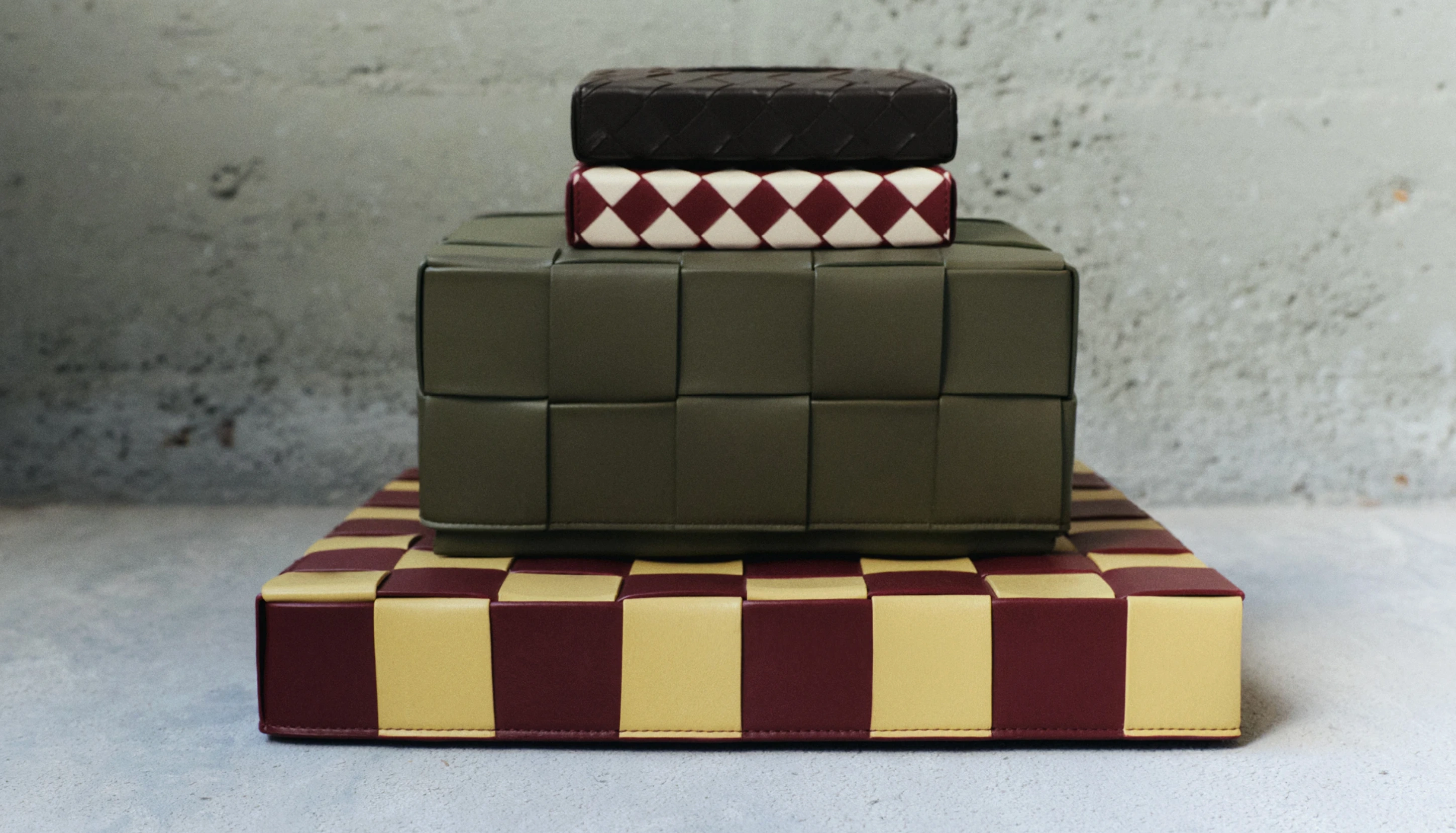
Bottega’s distribution strategy makes physical retail especially important. Kering reported that directly operated stores and e-commerce represented 85% of Bottega Veneta’s H1 2025 revenue, giving the house substantial control over how customers encounter products. Existing commentary on quiet-luxury retail connects slower, more personalized environments with the category’s emphasis on material and service (Ingrid). (Kering)
For a consumer brand, that control can be as important as media. A B2C marketing strategy should consider the experience after awareness, including product presentation, staff interaction, packaging, and aftercare.
Certificate of Craft and aftercare
The Certificate of Craft connects Bottega’s product story with service after purchase. Existing commentary has treated the program as evidence that craft and longevity are part of the brand proposition (Culted). Bottega’s current site describes complimentary care services on selected products, while regional terms define the exact eligibility and coverage (Bottega Veneta).
That makes aftercare a real extension of the brand story, but the loyalty effect should not be overstated. A care program may strengthen confidence and ownership experience; it does not prove that a customer will necessarily choose Bottega again. Existing commentary on the program is preserved here for context (Entri).
Bottega within the quiet-luxury conversation
Between 2023 and 2025, quiet luxury became a broad shorthand for intentionality, subtle branding, and material quality. Vogue has examined that shift toward less performative forms of luxury (Vogue). Bottega fits the conversation because Intrecciato, silhouette, and material can communicate identity without a repeating monogram. Existing outside commentary that classifies the brand as quiet luxury is preserved as part of that discussion (JH Handbag Factory).
For marketers, this is another place to distinguish trend from strategy. A company cannot create premium meaning simply by removing its logo. The recognizable product, service standard, distribution, and branding system have to support the restraint.
Craft over logos: what the 2025 results can support
Editorial coverage increasingly described craftsmanship as a central luxury value as prices rose and consumers became more selective (Vogue). Bottega’s product language fits that shift well, but the financial results should be treated as evidence of brand resilience rather than proof that customers bought specifically because of one craft message.
The stronger conclusion is that Bottega had a coherent system at a time when coherence mattered: recognizable products, selective distribution, controlled imagery, physical retail, aftercare, and a creative transition that preserved core house codes.

What other brands can learn for 2026
Bottega’s useful lesson is not “post less.” It is to make sure communication volume matches product depth. Build a small set of distinctive brand and product codes, repeat them consistently, and choose channels based on the experience you can support.
The comparison with Miu Miu’s marketing strategy is useful because the surface aesthetics are very different while the strategic discipline is similar. Both brands create recognizable worlds through repeated products, presentation, and cultural context.
How to apply this in your business in 2026
- Clarify what customers should recognize first. A branding agency in San Francisco can help regional businesses turn positioning into repeatable visual and verbal cues.
- Make the website a primary brand surface by improving hierarchy, speed, and product storytelling with a web design agency.
- Reduce friction from navigation through conversion with a UI/UX design agency.
- Use selective distribution without disappearing from discovery. Strong organic search visibility can make high-intent pages easier to find even when the brand avoids constant social posting.
- Treat packaging, service, and post-purchase care as part of the same brand experience rather than a separate operations layer.
FAQ
Why does Bottega Veneta use so few visible logos?
Bottega can rely on material, Intrecciato weaving, silhouette, color, and construction because those product codes already carry recognition. The lesson for other brands is not to remove logos before the underlying identity is distinctive enough.
How important is craftsmanship to Bottega’s brand story?
Craftsmanship is central to the product and communication story, from Intrecciato to editorial coverage and aftercare. The Certificate of Craft reinforces that idea on eligible products, but its exact coverage depends on the product and regional terms.
Did staying off mainstream social media cause Bottega’s growth?
Public data cannot establish that. Bottega remained largely without an owned mainstream social feed while it grew, but product, distribution, retail execution, pricing, creative direction, and earned media all moved at the same time.
What role does minimalist imagery play?
Minimal imagery keeps attention on product shape, material, and color. It is effective because those elements are already recognizable, not because empty space automatically creates premium meaning.
Restraint works when the brand has substance
Bottega Veneta’s 2025 results and 2026 momentum make the case more interesting, not more simplistic. The brand shows how craft, product codes, retail control, selective media, and aftercare can reinforce one another. What the public evidence cannot do is assign a precise share of growth to any one marketing choice.
If your brand needs a clearer system before it increases content or media volume, talk with Brand Vision about positioning, identity, digital experience, and channel strategy.