















Branding
B2B Branding Strategy: Positioning, Proof and Buying-Committee Trust
Sep 6, 2026
/ By Hamoun Ani
Brand Vision builds marketing from intelligence outward, creating custom strategies around the business, its competitors, and the forces shaping demand.
Brand Vision combines competitor intelligence, audience research, performance data, cultural signals, platform changes, and direct knowledge from the business to determine where the strongest opportunities exist. We then translate that intelligence into a custom marketing plan, connecting strategy and execution across every relevant channel. Each campaign has a reason to exist, a role within the customer journey, and a clear relationship to the wider business goal.

Building real partnerships with top global brands. Delivering results that last well beyond the launch.









A full range of marketing services, directed by research, competitor intelligence, and a clear read on what the business needs to grow.
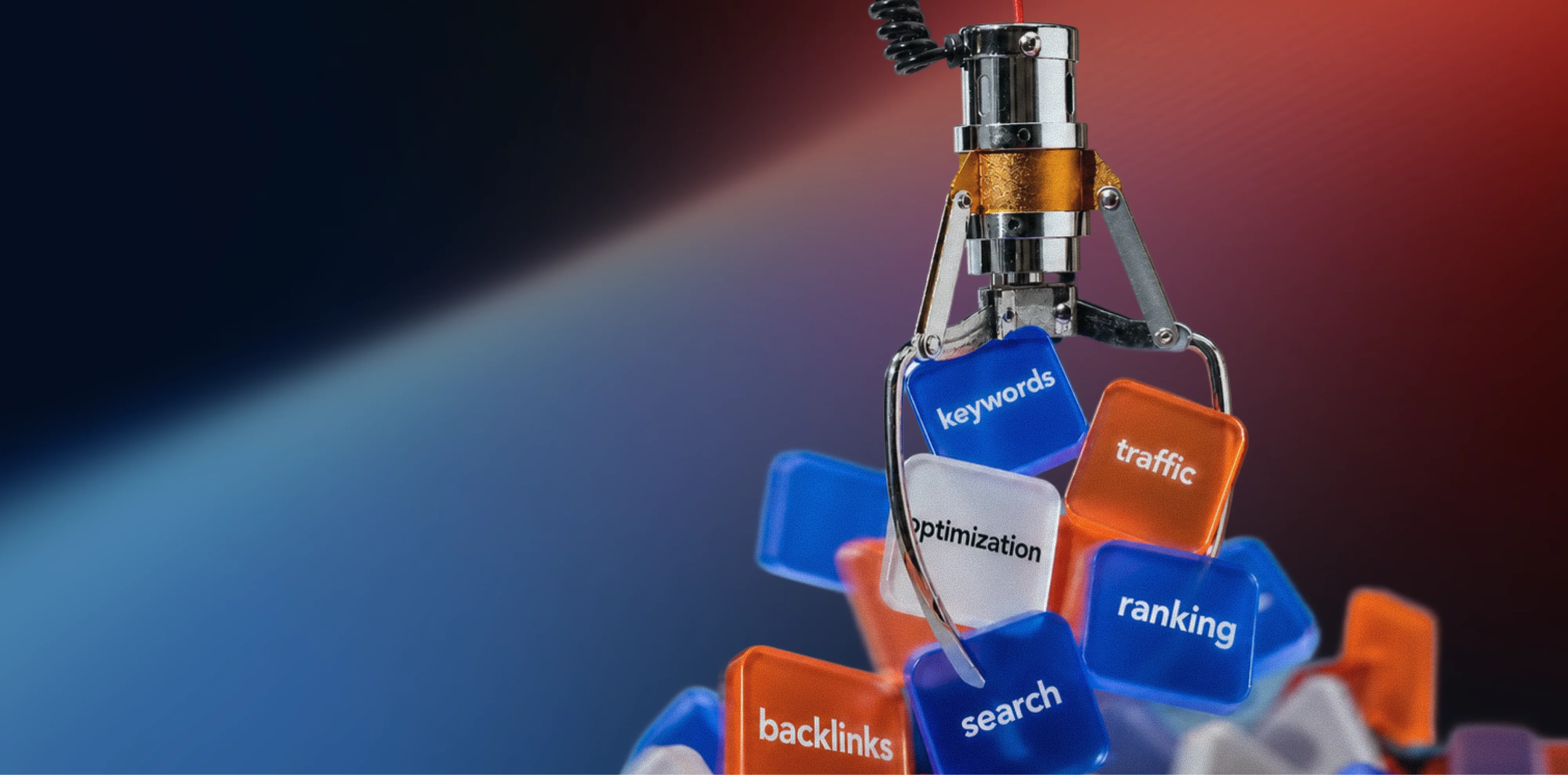
The value of SEO extends beyond the traffic it produces. Search reveals how customers describe their needs, which competitors own the conversation, and what information influences a decision. Brand Vision carries those findings into the wider marketing strategy, using SEO and GEO to strengthen discovery while informing content, messaging, website priorities, and future campaigns. Organic search becomes both a growth channel and a continuing source of market intelligence.

Paid media is where strategy meets the market at speed. It allows Brand Vision to test how audiences respond to different offers, messages, creative directions, and moments of intent, then turn that response into stronger decisions. Search, social, display, video, and remarketing are planned around their place in the customer journey rather than managed as isolated platform accounts. Budget moves toward the combinations showing the clearest potential to influence action.

Content is how a business turns what it knows into public authority. As a content marketing agency, Brand Vision brings customer questions, competitive gaps, search intent, industry change, internal expertise, and original research together to determine what the brand should contribute. We develop those ideas across articles, reports, campaigns, video, social, email, and sales content. The goal is not simply to publish consistently. It is to create information that the market has a reason to notice and remember.

Social media is the public memory of a brand, built through repeated signals rather than isolated posts. As a social media marketing agency, Brand Vision defines what role the brand should play in the conversations surrounding its market, then develops the creative, editorial rhythm, campaigns, and distribution needed to hold that position. Audience response and cultural movement continually inform the work, allowing the presence to remain current without losing the identity behind it.
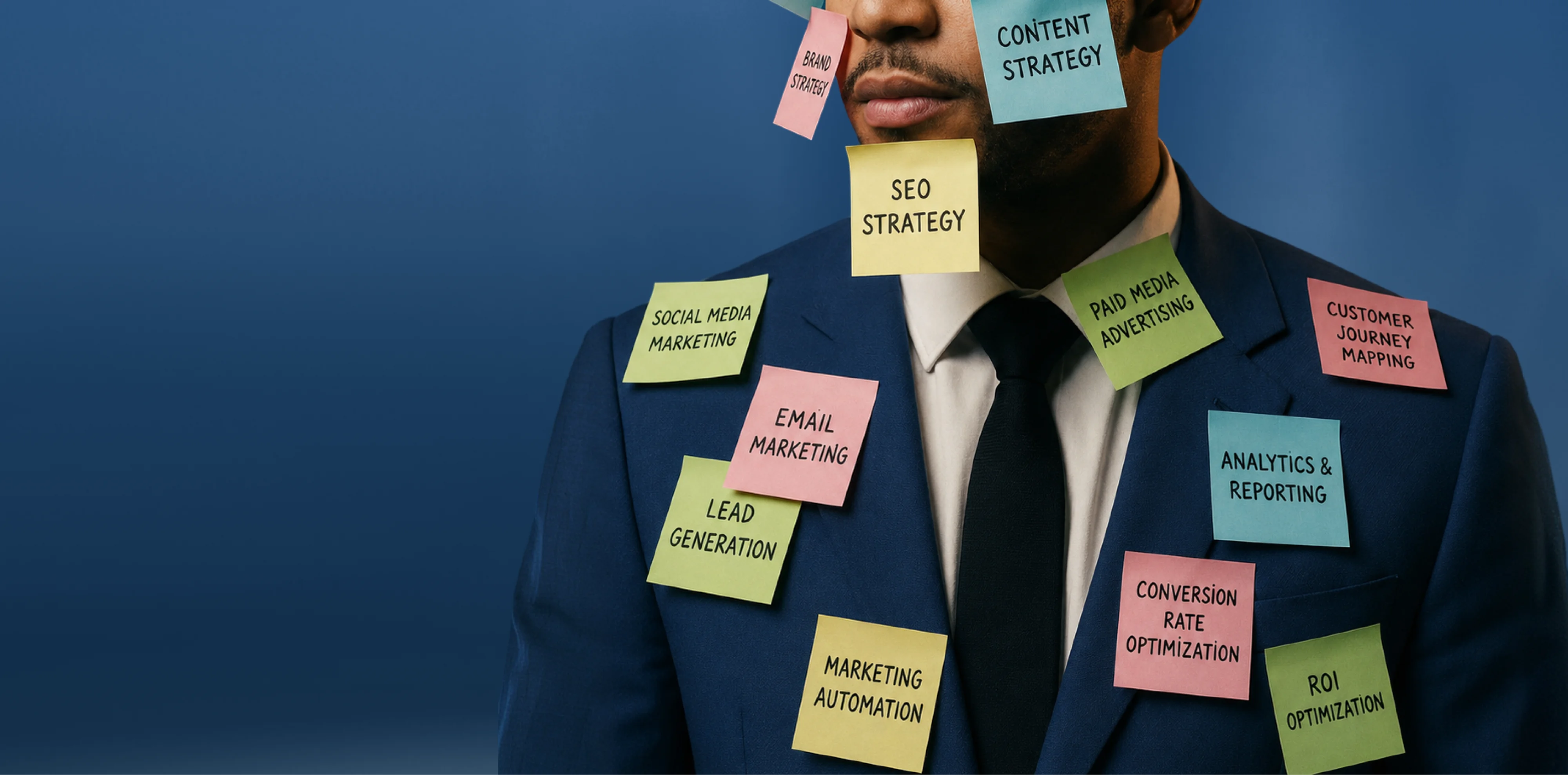
Some businesses need direction before they need execution. Brand Vision reviews the brand, website, campaigns, channels, customer journey, analytics, budgets, and internal capabilities to determine where progress is being limited. The consultation separates structural problems from temporary ones and compares the available courses of action. Leadership receives clear priorities, budget considerations, and a roadmap before committing resources to a larger marketing engagement.

Marketing becomes more effective when the business has a clear position and a recognizable identity behind it. Brand Vision defines what the brand should stand for, why the market should care, and how that idea should be expressed through messaging and visual design. As a branding agency, we build the strategic and creative foundation that gives campaigns greater consistency, improves recognition across channels, and prevents every new marketing initiative from inventing a different version of the business.

Marketing can bring the right audience to a website, but the experience determines whether that attention becomes confidence or disappears. Brand Vision connects positioning, content, UX, visual design, development, accessibility, and conversion into one custom digital experience. As a web design agency, we build websites that support the complete marketing journey, giving campaigns a stronger destination and customers a clearer reason to continue.
A research-led process that turns market intelligence into a plan, coordinated execution, and results you can measure.
We learn the market before we move in it, competitor activity, audience research, performance data, and what the business already knows. That intelligence shows where the real opportunities are before a dollar is spent.
We turn that intelligence into a custom plan: the positioning, the channel mix, the budget, and the role each part plays in the customer journey. Every campaign gets a reason to exist and a clear line to the business goal.
We run the plan across every relevant channel as one coordinated effort, not separate platform accounts. The message stays consistent while each channel does the specific job it's best at.
We track what each channel delivers against the goal, then move budget and effort toward what's working. The plan sharpens month over month instead of running on autopilot.
Selected marketing programs showing how research, strategy, and coordinated execution translated into measurable growth.
Every industry creates demand, trust, and urgency differently. Brand Vision adapts the message, channel mix, investment, and customer journey to the forces carrying influence within each market.












Product depth shouldn’t slow the story down. We partner with SaaS, platform, and enterprise software teams to translate technical capability into focused narratives. Clear paths to demo, trial, or contact serve both buyers and technical evaluators. Systems are built for product-led growth with composable components, editor guardrails, and instrumented analytics that tie directly to pipeline.
Complex services sell on clarity, not volume. We help consulting, financial, and advisory firms structure their digital presence around buyer tasks: understanding capabilities, comparing options, and starting a brief. Every touchpoint earns trust through specificity and proof. Content is organized by audience need, so the people making the hiring decision find answers quickly and move to contact without friction.
Patients and practitioners make high-stakes decisions under pressure. We design trust-first experiences for healthcare and wellness brands, keeping clinical accuracy intact while making it simple for people to find the right provider, service, or next step. Accessibility, privacy-compliant forms, and plain-language content are standard. Local visibility for practices and clinics is built into the foundation, not bolted on later.
Prospective clients searching for legal help are often under pressure and comparing firms quickly. We help law firms present practice areas with credibility, surface the right contact paths, and build a digital presence that earns trust before the first conversation. Clear structure, plain language, attorney profiles, and consultation flows make it easy for people to take the next step with confidence. Ethical advertising compliance is built in from the start.
Buyers, investors, and project owners move on trust and timing. We work with brokerages, developers, general contractors, and property management firms to present listings, projects, and capabilities with clarity. Content is organized around what prospects actually need: proof of work, service scope, location context, and a direct path to inquire. Pre-construction launches and trade portfolios get the same strategic rigor as resale platforms.
Conversion lives in the details. We work with consumer and ecommerce brands to build fast, clear shopping experiences where product pages explain value quickly, checkout flows reduce friction, and the entire system scales with the catalog. Promotional templates, collection architecture, and performance monitoring keep the storefront sharp as demand and inventory shift with seasons. The result is a store your team can run day to day without developer dependency.
Early-stage companies need focus over flash. We help startups define positioning, build a credible identity, and launch a conversion-ready presence that clearly communicates what the product does, who it’s for, and how to get started. Everything is built to scale: component systems, content structures, and analytics foundations grow with the roadmap instead of needing a rebuild at Series A. The pitch and the website tell the same story.
Students, parents, and administrators all need different answers from the same site. We help schools, universities, and training organizations structure digital experiences by task: apply, visit, inquire, enroll. Accessible design and plain-language content serve diverse audiences without alienating any of them. A manageable CMS means internal teams keep program pages, event listings, and admissions information current without outside help or bottlenecks.
Nonprofits compete for attention, funding, and volunteers simultaneously. We build accessible digital experiences that make programs clear, donation paths intuitive, and calls to action specific enough to drive real participation and support. Content governance is designed for lean teams, so pages, campaigns, and impact reports stay current without bottlenecks. The organizations doing the most important work deserve a digital presence that matches their mission.
From restaurants to packaged goods, this industry sells on quality and convenience. We help food and beverage brands connect story with logistics: clear menus, product lines, ordering options, and wholesale paths that make it obvious how to buy and reorder. Identity and digital experience work in tandem so visitors see quality and know exactly what to do next, whether they’re a consumer walking in or a distributor placing a first order.
Audiences decide in seconds. We work with labels, venues, talent agencies, and event companies to build media-rich, performance-optimized experiences where the work is front and center. Booking, inquiry, and ticket paths stay visible and fast across devices. Campaign templates and component systems let teams launch content for new shows, releases, and events without starting from scratch each time. The creative comes first; the infrastructure stays invisible.
Guests research and book across multiple touchpoints. We help hotels, resorts, tourism brands, and event venues present their experience with clarity, connecting visual storytelling with practical booking flows, local discovery, and seasonal content that stays current. The systems we build make it straightforward for teams to update rates, packages, and promotions without depending on a developer for every change. The experience starts online, and it should feel as considered as the stay itself.











Original research and expert perspective on design, branding, and the strategy behind both.
Still have questions? Contact us to discuss.
It decides where to spend before it decides what to make. Most agencies open with a channel recommendation, because a channel is easy to sell and easy to staff. We open with a read of the market, and the plan comes out of that read instead of arriving ahead of it.
Brand Vision investigates three things before anything gets proposed.
The demand that already exists. What people are searching, asking, and comparing, in their own words. This is the cheapest intelligence available and the most consistently skipped. It tells you which problems your market already knows it has, which is very different from the problems you wish it had.
The competitors who currently own the answer. Not a list of their channels, but where their attention actually is, what they have committed budget to, and where they have left something unguarded. There is almost always a gap, and it is usually not the one a competitor would expect you to walk through.
What the business already knows. Sales calls, support tickets, churn reasons, the objection your team hears every week. Companies sit on better market intelligence than any agency can buy, and it is nearly always undocumented.
That read takes two to four weeks on most engagements, and it is the one part of a program we will not compress on request. Out of that comes a marketing strategy with a position, a channel mix, a budget split, and a job for every piece of it. Then execution runs across organic search, paid advertising, content, social, and the website as one coordinated effort, so the message holds together while each channel does the specific thing it is good at.
The reason this matters commercially is unglamorous. Marketing money is mostly lost to correct execution of the wrong plan. A beautifully run campaign for an audience that was never going to buy still fails, and it fails expensively and slowly, which is the worst combination. Research is not a phase we sell you before the real work. It is what makes the real work worth paying for.
Brand Vision is a branding and digital marketing agency, award-winning and headquartered in Toronto, with three further offices in Chicago, San Francisco and Miami. The practice opened in 2018 and has since delivered upwards of 500 projects for roughly 150 brands. That is the record. The reasons it should weigh on a marketing decision are narrower.
Campaigns here sit on brands this team positioned itself. Most of the programs we run are built over identity and messaging shaped in our own studio, so the creative is working from a story it helped write instead of inferring one from a brand book. Where the brand strategy was set by somebody else, we spend the first two weeks learning it properly before anything gets built on top of it.
Reporting lands on leads, pipeline or revenue. Impressions and reach are diagnostic at best and they never lead a report from us. Where a channel cannot be tied to something your finance team already counts, you hear that stated plainly and no softer number takes its place.
Every account and every pixel of data belongs to you. Ad platforms, analytics, tag containers, audience lists, creative files. All opened in your name at the start, so ending the relationship costs you a transfer of ownership and never a rebuild from nothing.
A channel gets ruled out before it gets funded. When the arithmetic on a platform does not close, we say so before budget is committed to it, which has meant advising against paid social, against a podcast, and against a second content hire. Losing that scope is cheaper for us than defending a channel we never believed in.
The six-month minimum binds us as well. Ongoing programs need two quarters before the compounding parts can be read at all, and the same window stops us declaring a win in week six on a number that has not settled.
On outcomes, the figure this practice quotes is a 250% average lift in leads over past programs. That average pools businesses of very unlike size and starting condition, several of them running for years, and it records completed work instead of forecasting yours. The programs published in full are better evidence than any single percentage.
Two kinds of buyer are better served somewhere else, starting with the company that already has a marketing lead setting direction and heavy spend concentrated in one platform, where a dedicated specialist will beat us on depth. The other is the company that needs somebody in its channels every morning owning the calendar and the inbox, which is an internal hire, and hearing that from us costs one conversation instead of two quarters.
Specialists win on depth. A full-service marketing agency wins on coordination. Which one you need depends on whether your problem is execution quality or strategic coherence. Anyone who answers that question without asking about your situation is selling, so here is the honest version of both.
Where specialists are the better choice. You already have a marketing lead who owns the strategy and needs excellent hands on one channel. Your spend in that channel is large enough that a percentage point of efficiency pays for the specialist outright. Or you are in a category so narrow that channel-level expertise beats general judgment. In those situations a best-in-class partner in one lane will outperform a generalist team, and we will say so.
Where the split starts costing you. Four vendors produce four strategies, and none of them is accountable for the total. The paid team optimizes for cost per lead while the content team optimizes for traffic, and both hit their number while the business does not. Messaging drifts between channels until the brand reads differently depending on where you meet it. Nobody owns the handoff, so the campaign sends traffic to a page nobody briefed. And you become the integration layer, which means the most expensive person in the process spends their week translating between agencies.
What we do instead is run one plan across every channel that is relevant, with one accountable team answering for the outcome and not for a channel metric. The full range sits under one roof for that reason, and the budget moves between channels during the engagement instead of being locked to whoever won the account.
The honest limit is worth naming too. Full-service only beats specialists when the agency is genuinely capable in each channel it claims. Breadth without depth is worse than a good specialist, and the way to check is to ask which channel we are weakest in. We will answer.
There is a second check that costs you nothing, which is to ask for reporting from an engagement where a channel was cut mid-program. An agency that has never moved budget away from its own strongest team has never really run a coordinated plan.
Seven, and the digital marketing services below get chosen per engagement instead of sold as a bundle. A plan that includes everything is a plan that has not made a decision yet.
Two things follow from that list. First, no Brand Vision engagement uses all seven at once, and a proposal that does should make you suspicious. What gets recommended comes out of the research, and it is common for the answer to be two channels done properly instead of five done thinly.
Second, they are not priced as separate retainers stacked on top of each other. It is one plan with one budget, and the split shifts as the data comes in. If paid is outperforming its share in month three, that is where the money goes, and you will see the reasoning in the monthly report before it happens.
You can run marketing on an unfinished brand, and plenty of companies do it successfully. What it costs you is efficiency, and that bill arrives quietly. So the useful answer here is about sequence and not permission.
Here is the mechanic behind it. Every ad, article, and post either adds to something the market recognizes or starts from zero. When the position keeps shifting, each campaign pays full price for attention and banks none of it. Two years of that produces awareness of individual campaigns and no awareness of a company. When the position holds, the third exposure costs less than the first, because recognition is doing part of the work the budget used to do.
As a branding agency we get asked to make this call constantly, so here is how we make it.
When to fix the brand first. Nobody internally can state who you are for and why you beat the named alternative in one sentence. Your market is crowded with companies that sound like you. You are about to commit real budget over a long period. Or you have grown into something the current identity no longer describes.
When to start marketing immediately. You have a clear position and only need it expressed more consistently. Demand is time-sensitive and waiting a quarter costs more than the inefficiency will. Or you need revenue now, in which case we run capture channels while the positioning work happens in parallel. That is a common and entirely reasonable order.
The version we push back on is a full identity project as a prerequisite for any marketing at all. That delays revenue for months and is sometimes a way of avoiding the harder decision underneath. If your position is roughly right, sharpening the message costs a fraction of a rebrand and returns most of the benefit.
We will tell you which of those situations you are in during the first conversation, including when the answer is that your brand is fine and something else is the problem.
Budget follows evidence of demand, not channel preference. The first question is never which platform to use. It is where people in your market are already making decisions, and how close each of those moments is to a purchase.
The sequence we work through.
One thing we will not do is set the split in month one and defend it for a year. The initial allocation is our best read from the research, and it is meant to be wrong in places. What matters is how fast it corrects, which is why the measurement setup gets built before the spending starts instead of after.
A marketing audit is a structured read of everything currently in motion, ending in a decision about what to change and in what order. It exists for companies who suspect their marketing is underperforming and cannot get agreement internally about why. This is the work people are usually looking for when they go searching for a marketing consultant.
What gets reviewed is deliberately wider than a channel report. The brand and how clearly it is positioned, the website and where it loses people, campaign history and what each one actually returned, channel by channel performance, the customer journey end to end, analytics and whether the tracking can even be trusted, budget allocation against results, and your internal capabilities, since a recommendation your team cannot execute is not a recommendation.
The work then separates structural problems from temporary ones. A campaign underperforming because the offer is weak is a different problem than one underperforming because the landing page loads in six seconds, and treating both as a media problem is how budget disappears quietly. Where the issue turns out to be technical, it routes to an SEO and site audit instead of being described in marketing language.
Leadership receives priorities in order, the budget implications of each one, the options that were considered and rejected, and a roadmap with a sequence. It is written to be read by a decision-maker in twenty minutes and defended to a board afterward.
Where a consultation ends and an engagement begins. A consultation is scoped, paid, and finite. You get the analysis and the plan, and you own it. Plenty of clients take it and execute internally, which is a legitimate outcome and one we price for. An engagement is ongoing execution against that plan, with our team running the work.
The reason to start here is uncomfortable but true. Most companies who ask us for campaign help do not have a campaign problem. They have an unresolved question about who they are for, and no amount of media spend answers it.
Publishing regularly is an output. Content marketing is a decision about what your business is going to be known for saying, and then saying it in the places where that reputation is worth something. The second one is much harder and it is the only one that compounds.
As a content marketing agency the difference we see most is in what gets made. A publishing habit produces posts on subjects that are adjacent to your industry. A content program produces a small number of things the market has an actual reason to notice. Original research nobody else has run. A report that becomes the reference in your category. A teardown of a problem your competitors are too careful to discuss. Documentation so useful people send it to each other.
What it spans in practice goes well past articles. Long-form editorial, industry reports, video, email sequences, social, and the sales collateral your team uses in a live pitch. The same core argument shows up in all of them, sized for the format, which is why one strong idea can carry a quarter and twelve weak ones carry nothing.
Where the ideas come from matters more than the calendar. Customer questions, gaps competitors have left unresolved, search intent, industry change, and the expertise sitting inside your business unused. Interviewing your own team for two hours reliably produces better material than a month of desk research, and almost nobody does it.
The test we apply before anything gets made. Could a competitor publish this with their logo swapped in. If yes, it is not worth producing, because it will not be remembered or linked to or cited by an AI system deciding who the credible source is. That last part has changed the economics recently. Content with something original in it gets attributed. Content that restates consensus gets absorbed without credit.
Where the search side of this lives, meaning cluster architecture, keyword intent, and how pages support each other, that runs through content strategy and AI search visibility as a connected discipline and not a separate department.
Social is where a brand accumulates a reputation through repetition, which means it is judged over quarters and not by the performance of any single post. As a social media marketing agency we work on the position first and the posting second, because a consistent presence with nothing to say is just visible mediocrity.
The starting question is what role the brand should play in the conversations already happening around your market. There are only a few honest answers. The company that explains the category better than anyone. The one with a point of view others react to. The one whose work speaks for itself and needs little commentary. The one that is genuinely entertaining, which is the hardest and least fakeable. Picking one and holding it beats sampling all four.
From there the work covers creative and art direction that stays recognizable across formats, an editorial rhythm the business can actually sustain, campaign concepts with a reason to exist, community management and response, paid amplification where a post deserves more reach than it earned organically, and reporting tied to saves, shares, and qualified enquiries.
Yes, we run accounts end to end, and we also work the other way where an internal team posts and we provide the strategy, the creative system, and the guardrails. That second model is often better, because the people inside the business have access to material an agency has to ask for. The usual failure mode in that arrangement is a calendar built for a team of four being handed to one person who already has another job, so we size the rhythm against whoever is actually going to do the work in month seven instead of against what looked ambitious at kickoff.
Two honest notes. Follower count is close to meaningless on its own, and any agency leading a report with it is managing your perception rather than your growth. And social rewards a specific personality, which means the visual and verbal identity has to be settled enough to survive being adapted weekly. You can see how that consistency plays out across formats in the work.
Every channel you fund ends at the same place, so the site sets the ceiling on all of them at once. This is the least interesting sentence in marketing and the most expensive one to ignore.
The arithmetic is blunt. A site converting at one and a half percent when it should convert at three is charging every campaign double. Doubling the ad budget doubles the leak alongside the volume. Fixing the destination lifts search, paid, social, email, and referral in the same week, at a cost that is usually a fraction of one quarter of media spend.
The review runs in a deliberate order, opening with whatever turns out to be the problem most often. Whether the page a campaign lands on matches the promise the campaign made, which is the single most common break and the easiest to fix. How fast it loads on a mid-range phone on a normal connection. Whether the primary action is obvious inside three seconds. How much friction sits in the form. Whether the proof a hesitant buyer needs is present at the moment of hesitation. And whether the mobile experience is the real experience or an afterthought, given where the traffic is.
The published speed threshold is that the main content of a page should appear in under two and a half seconds, and a mid-range phone on cellular data is the device that decides whether you clear it. Form length is the cheapest of those variables to change. Every extra required field costs completions, and a good number of the forms we inherit are collecting three or four details a salesperson could establish in the first ninety seconds of a call.
As a web design agency as well as a marketing one, we keep the site inside the marketing conversation instead of treating it as a separate purchase. Positioning, content, interface and usability, development, and conversion get connected in one build, because a site designed without the campaigns in mind produces beautiful pages that no campaign can point at.
If a rebuild is not on the table this year, that is fine and often correct. Targeted work on the pages campaigns actually land on, or a structured redesign scoped to the highest-traffic paths, returns most of the value for a fraction of the commitment. We will tell you which of those two you are looking at before proposing the larger one.
Some of it transfers and some of it genuinely does not, and knowing which is which is the part that matters. Agencies overstate this in both directions, either claiming deep expertise in every category or dismissing industry knowledge as a myth.
What transfers between industries. How people evaluate an expensive decision. Where trust gets built or lost in a journey. Which creative approaches earn attention. How to structure a test. What a healthy funnel looks like. These are patterns in human behaviour, and an agency that has seen them across forty categories reads them faster than one that has only seen them in yours.
What does not transfer. Sales cycle length and who is actually in the room for the decision. Regulatory limits on what you are allowed to claim. Seasonality and the events that move a year. Channel behaviour, since the platform that carries a consumer purchase can be irrelevant to a procurement committee. And the vocabulary buyers use, which is learned and never guessed.
So the useful question is not whether we have worked in your industry. It is whether we understand what makes your industry different, which we establish through research at the start rather than assuming from a case study. That research is short and it is not optional. In practice that means a handful of conversations with your sales and service people, a read of the last year of closed-won and closed-lost reasons, and a scan of how the three most visible competitors in your category describe the same problem.
On coverage, across industries Brand Vision has worked in real estate and development, B2B and professional services, technology and SaaS, funded startups, health and wellness, education, hospitality, food and beverage, legal, entertainment, and not for profit. Ten years of it, which is enough range to have made most of the available mistakes already.
There is a real argument for the outside view too. An agency embedded in one category for a decade tends to inherit its conventions, including the ones costing everyone money. Sometimes the thing your market is missing is an approach that is normal somewhere else.
Some channels report within days and some take two quarters, so a marketing program should be judged against a schedule agreed at the start instead of a feeling in month two. Paid media produces readable data in one to three weeks. Content and organic search move between month three and month six. Brand-level effects like recognition and referral show up later and are the hardest to attribute honestly.
The average lift in leads named further up this page deserves more context than a credential line can carry, so here it is. It averages programs of very different sizes and starting positions, several running longer than a year, and it includes work across more than one channel. It is a record of what has happened, not a projection for your business. Any forecast we give you gets built from your numbers, your margins, and your sales cycle, with the assumptions written down where your finance team can argue with them.
What actually gets reported, in the order it appears.
One caution about performance marketing reporting in general. Marketing ROI looks cleanest in the channels that are easiest to measure, which quietly biases budget toward them and away from the work building demand upstream. We report both and label which is which.
On attribution we will be straightforward with you. Nobody has perfect measurement anymore. Privacy changes, cross-device journeys, and dark social all break the clean line between spend and outcome. What works is triangulating platform data, analytics, and what your sales team says about where good leads are coming from. An agency claiming exact attribution is either measuring the easy part or hoping you do not ask, and if a quarter underperforms you will hear it from us with the diagnosis attached, in the report and on the call.
Most marketing work runs as a monthly retainer, because the compounding effects need continuity and a one-quarter push mostly buys you a data set. Audits, consultations, and defined projects are the exceptions and are priced as fixed scopes.
What moves the number.
Brand Vision engagements usually open with a scoped marketing strategy phase, then move to a monthly program with a minimum term of around six months. That minimum protects you more than it protects us. Leaving at month four means paying for the investment period and exiting before the return, which is the most common way companies conclude that marketing does not work for them.
You will also get told when the honest recommendation is smaller than what you asked for. We have proposed a consultation to companies who came in ready to sign a retainer, because the audit was what they needed and the retainer would have been us being paid to find out. Tell us the situation and you will get a real read, including who would actually be doing the work.

Tell us about your goals and project, and receive a proposal shaped to your brand, your timeline, and your budget.


%2520(1).png)
.png)