














Brand Vision is an award-winning branding agency, trusted to build identities that hold their meaning as a business grows.
A brand is a promise a business makes and then has to keep, in every logo, message, and interaction. Brand Vision builds that promise on research rather than instinct, defining a clear position and translating it into an identity and design system made to last. As a branding company working across industries, we shape brands that stay recognizable and relevant well beyond their launch.

Selected Clients
Trusted by
Leading Brands
Building real partnerships with top global brands. Delivering results that last well beyond the launch.






Services
Our Branding Services
Brand Vision's branding, strategy, and creative services. Shaped around how a brand looks, sounds, and grows.
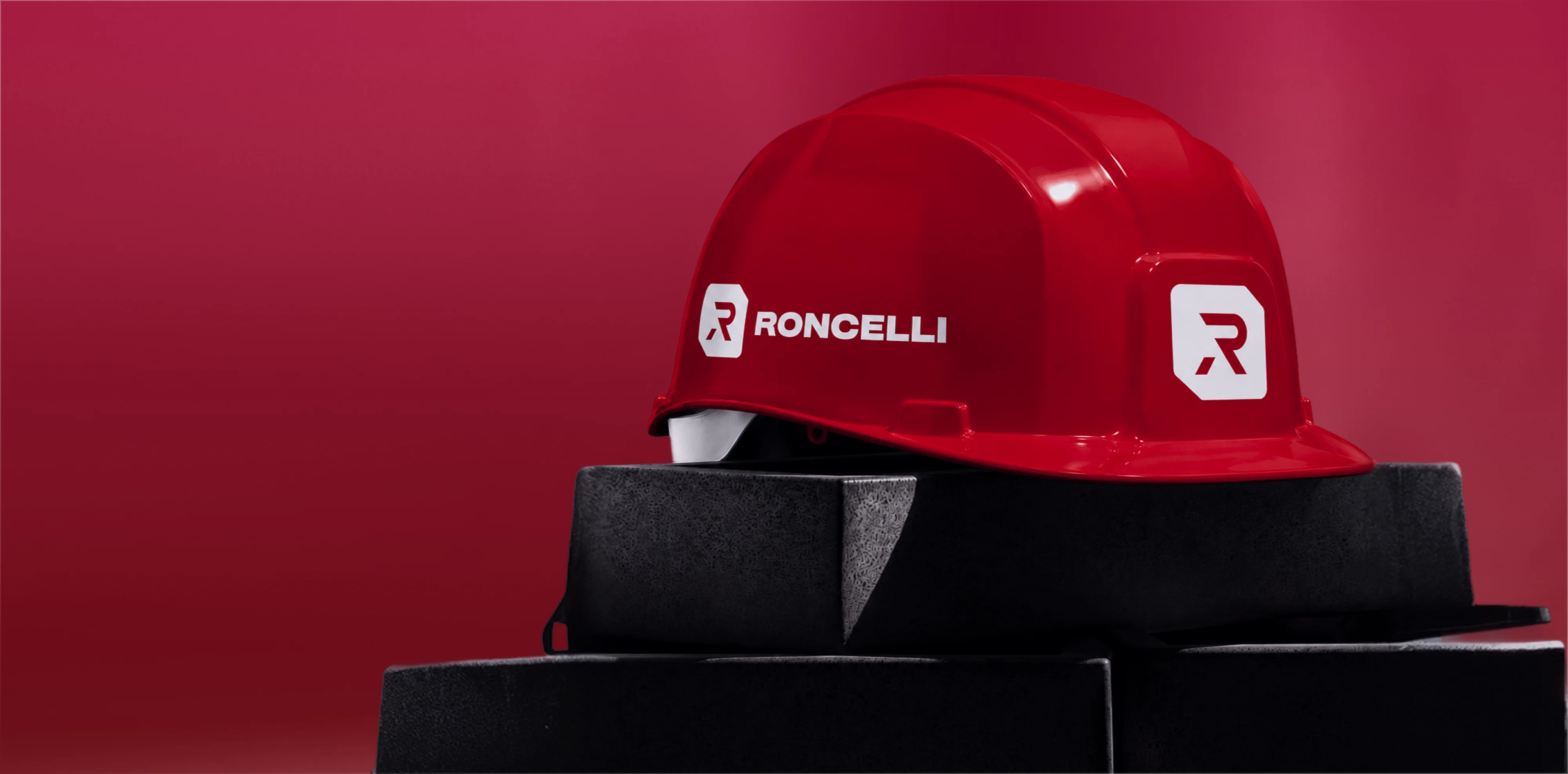
A logo carries more recognition per square inch than anything else a brand owns, which is why it has to work as well on a phone screen as on a building. Brand Vision designs logos that are distinctive, versatile, and grounded in strategy rather than a passing trend, tested across the sizes, palettes, and contexts a business will actually use. It's one of the first branding services most clients come to us for, and the mark it produces stays recognizable wherever it appears and holds its meaning as the brand grows around it.

A logo is a starting point. A visual identity is the entire system that surrounds it and makes a brand feel like itself everywhere it shows up. As a branding company, Brand Vision develops the palette, typography, imagery, and design language that hold a brand together across every platform, from a storefront to a screen to a campaign. Each element is designed to work on its own and as part of the whole, so the identity stays consistent without becoming repetitive and recognizable without going stale.
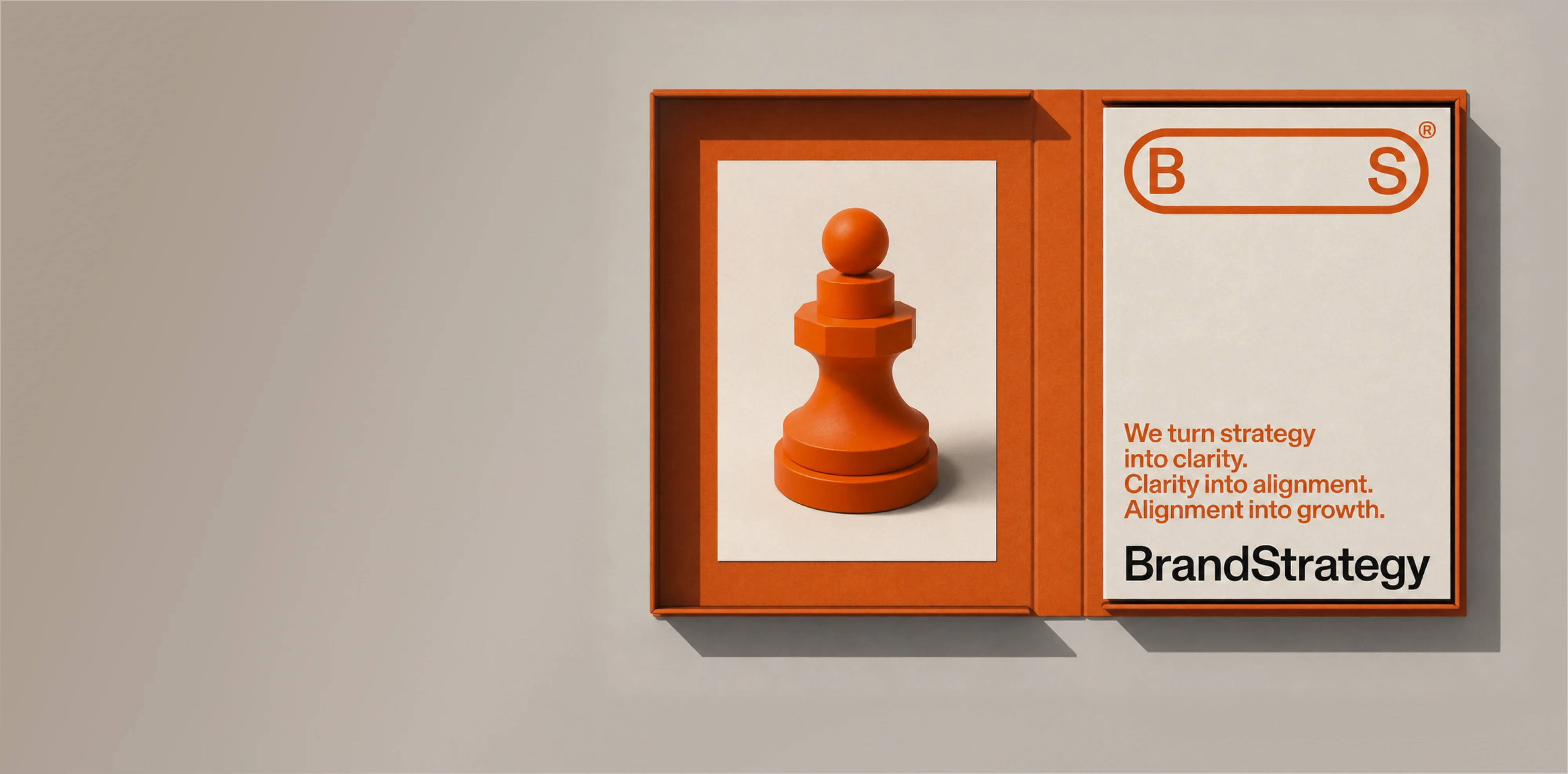
Before a brand looks like anything, it has to stand for something. Brand Vision defines the positioning, audience, and messaging that give a brand a clear place to occupy in a crowded category, then turns that thinking into a strategy every later decision can answer to. It's the work that separates a real brand agency from a design shop and serves as the foundation on which the identity, website, and marketing are all built. Get the strategy right, and everything downstream gets easier.

The best branding decisions rely on evidence, not assumption. Brand Vision studies the market, the audience, and the competitors already shaping a category, along with the perceptions a brand is working with or against. The value isn't in gathering the information. An experienced branding firm earns its place by knowing how to read the market and what should influence the work. That research gives a brand a position it can credibly own and a direction it can move in with confidence, rather than a guess dressed up as a decision.

A brand is only as strong as the work that carries it into the world. Among our branding services, graphic design is what brings an identity to life across print, digital, and everything in between, from marketing materials and packaging to social and presentations. Every piece stays true to the system it belongs to while doing the specific job in front of it, whether that's making a sale, explaining an idea, or simply looking the part. Consistency and craft are the focus for every asset and at every scale.
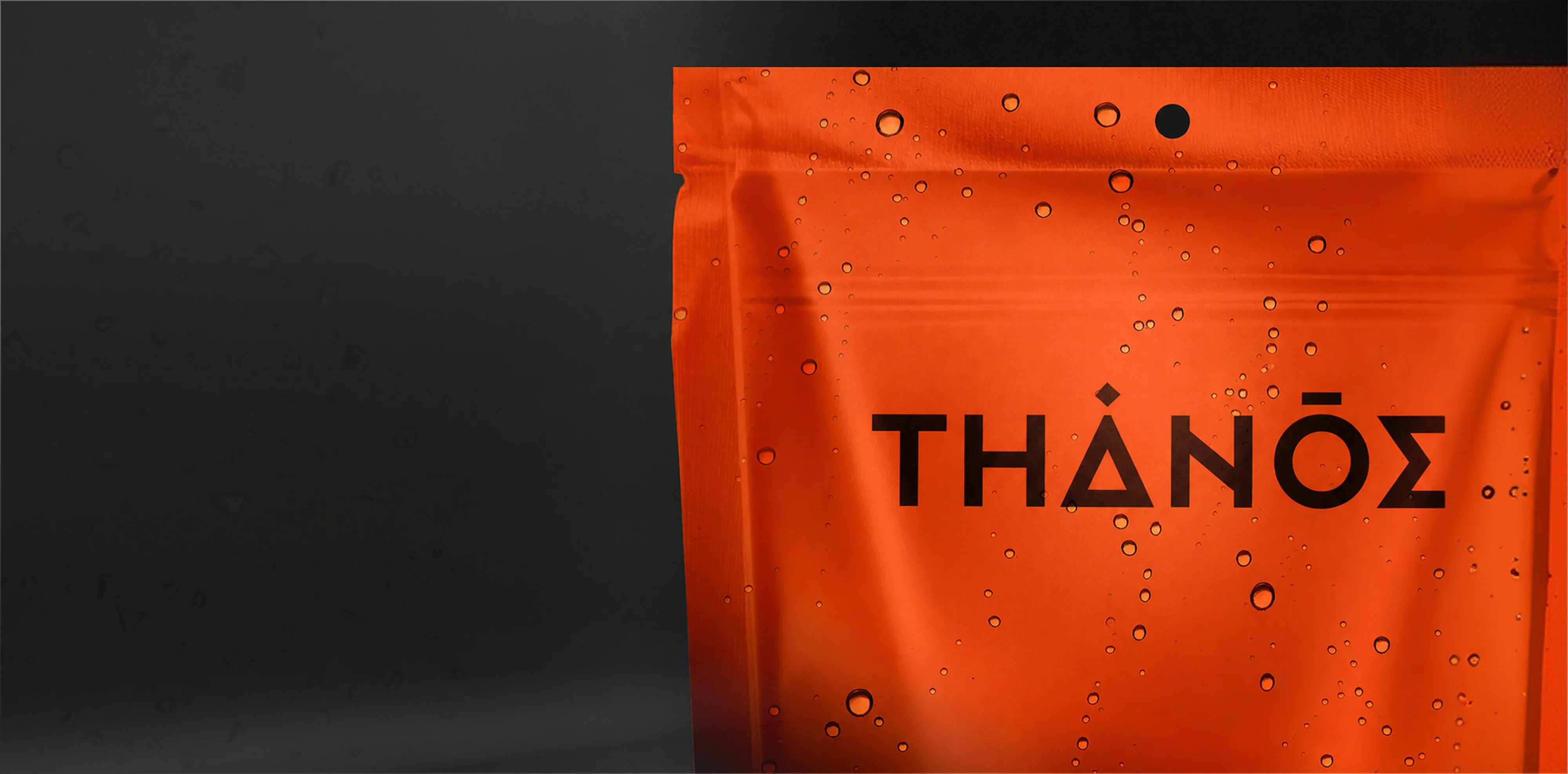
A name is the first and most repeated thing a brand asks people to remember. Brand Vision develops names that are distinctive, ownable, and built to hold up legally and linguistically, grounded in the brand's strategy and the market it's entering. The work runs from generating and pressure-testing candidates to checking that a name can be trademarked and secured before anyone commits to it. The right name makes everything that follows easier, and the wrong one quietly makes everything harder.

A rebrand has to move a business forward without erasing the equity it has already built. Brand Vision approaches rebranding by separating what still works from what no longer serves the business, then rebuilding the strategy, identity, and design around where the brand is going next. As the branding company behind the change, the hardest judgment we make is knowing what to keep, since a rebrand that discards too much can confuse the people who already know you. The aim is an evolution the market recognizes, handled so the brand gains ground instead of starting over.
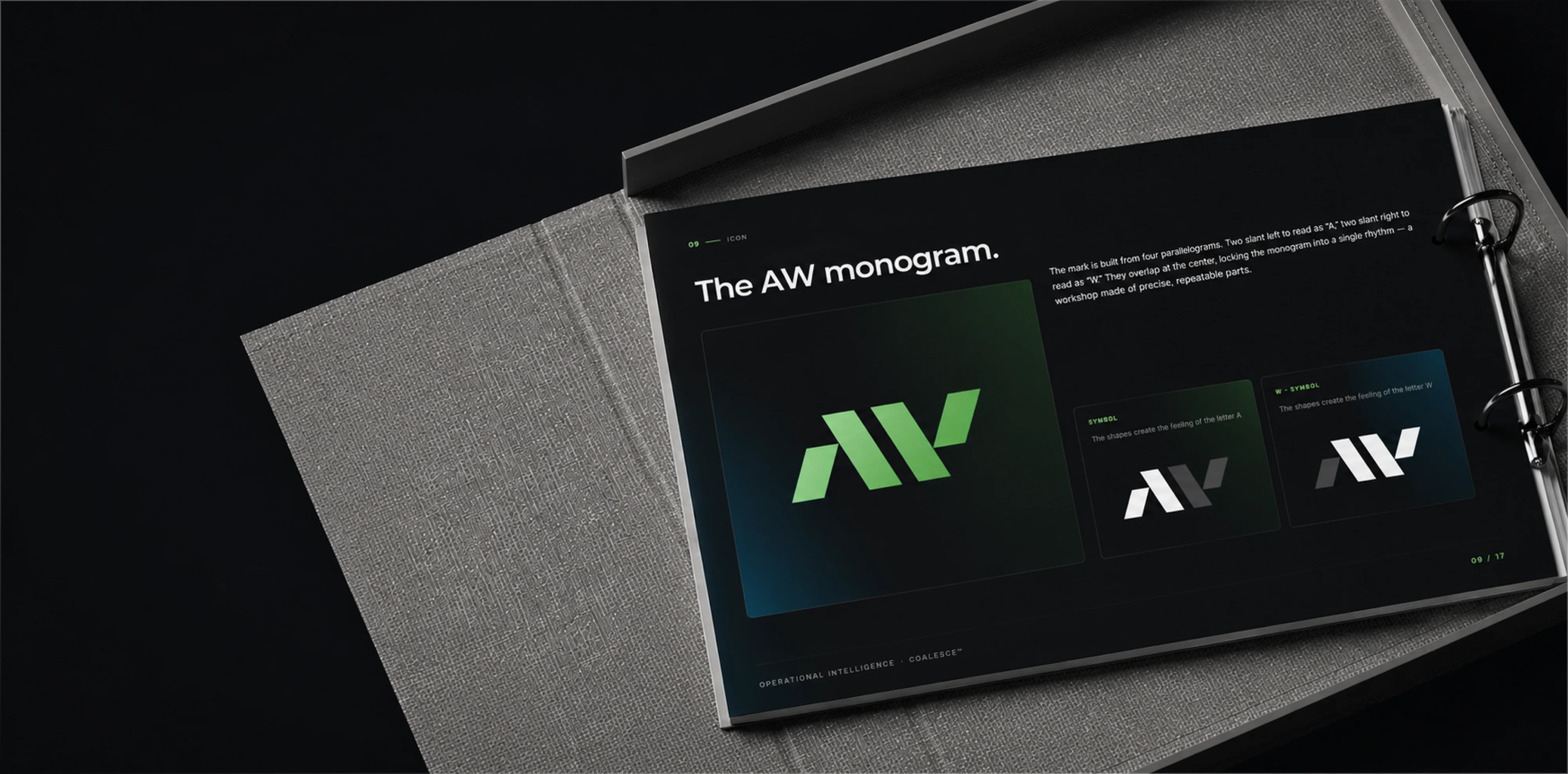
A brand is only as consistent as the rules that protect it. Brand Vision documents the logo usage, palette, typography, voice, and application standards that keep an identity intact no matter who is using it or where it ends up. Good guidelines are practical rather than decorative, giving an internal team, a printer, or an outside agency clear answers instead of guesses. That's what turns a brand from a folder of files into a system a whole organization can run without diluting it.
Process
Our Branding Process
A structured path from research to rollout, so every decision is aligned and validated before the brand ships.
01
Discover
We align on goals, plan the research, and talk to the people who shape the brand, customers, sales, product, and leadership. We review the existing materials and analytics too, so nothing useful gets left behind.
02
Define
We define the positioning, messaging, and brand architecture, then document it clearly. Writing down the thinking is what lets a brand scale past the core team without drifting.
03
Design
We explore identity directions, build out the system, and test it in real applications rather than on a pristine slide. Reviews are structured and decisive, so the work keeps moving instead of stalling in feedback.
04
Deliver
We hand over guidelines, toolkits, and assets organized for immediate use, then map the first ninety days of rollout and stay close as you ship.
Selected Work
Our Branding Work
A selection of identity, strategy, and design work, shown through the problem behind it and the results that followed.
Industries
Branding
Across Industries
Every industry brings its own audience, pressures, and expectations. We shape the strategy, identity, and design around what a market responds to and where the business is positioned to go.

Technology

Professional Services

Healthcare

Legal

Real Estate

Ecommerce

Startups

Education

Nonprofit

Food & Beverage

Entertainment

Hospitality
Technology, SaaS, and B2B Software
Product depth shouldn’t slow the story down. We partner with SaaS, platform, and enterprise software teams to translate technical capability into focused narratives. Clear paths to demo, trial, or contact serve both buyers and technical evaluators. Systems are built for product-led growth with composable components, editor guardrails, and instrumented analytics that tie directly to pipeline.
- Feature and use-case pages
- Clear product messaging
- Demo and trial signup flows
- Resource hubs that rank
- CMS your team can run
- Pipeline and signup analytics
B2B, Consulting, and Professional Services
Complex services sell on clarity, not volume. We help consulting, financial, and advisory firms structure their digital presence around buyer tasks: understanding capabilities, comparing options, and starting a brief. Every touchpoint earns trust through specificity and proof. Content is organized by audience need, so the people making the hiring decision find answers quickly and move to contact without friction.
- Service pages by client need
- Credentials that build trust
- Consultation and intake flows
- Content for decision-makers
- Case studies that convert
- Visibility for core services
Health, Wellness, and Medical
Patients and practitioners make high-stakes decisions under pressure. We design trust-first experiences for healthcare and wellness brands, keeping clinical accuracy intact while making it simple for people to find the right provider, service, or next step. Accessibility, privacy-compliant forms, and plain-language content are standard. Local visibility for practices and clinics is built into the foundation, not bolted on later.
- Provider and service finders
- Accessible design for all patients
- Privacy-compliant intake forms
- Patient education content
- Local visibility for practices
- Compliant messaging and structure
Law Firms and Legal Services
Prospective clients searching for legal help are often under pressure and comparing firms quickly. We help law firms present practice areas with credibility, surface the right contact paths, and build a digital presence that earns trust before the first conversation. Clear structure, plain language, attorney profiles, and consultation flows make it easy for people to take the next step with confidence. Ethical advertising compliance is built in from the start.
- Practice pages that rank
- Attorney profiles and credentials
- Consultation booking flows
- Local visibility for firms
- Client-facing FAQs and guides
- Ethical advertising compliance
Real Estate, Construction, and Property Development
Buyers, investors, and project owners move on trust and timing. We work with brokerages, developers, general contractors, and property management firms to present listings, projects, and capabilities with clarity. Content is organized around what prospects actually need: proof of work, service scope, location context, and a direct path to inquire. Pre-construction launches and trade portfolios get the same strategic rigor as resale platforms.
- Listing and project showcases
- Pre-construction campaigns
- Maps, galleries, and floor plans
- Buyer and investor lead capture
- Neighborhood and market content
- IDX and MLS integration
Ecommerce, Retail, and Direct-to-Consumer
Conversion lives in the details. We work with consumer and ecommerce brands to build fast, clear shopping experiences where product pages explain value quickly, checkout flows reduce friction, and the entire system scales with the catalog. Promotional templates, collection architecture, and performance monitoring keep the storefront sharp as demand and inventory shift with seasons. The result is a store your team can run day to day without developer dependency.
- Product pages that convert
- Checkout flow optimization
- Category and collection structure
- Mobile search and filtering
- Seasonal promo templates
- Speed and performance tracking
Startups and Emerging Companies
Early-stage companies need focus over flash. We help startups define positioning, build a credible identity, and launch a conversion-ready presence that clearly communicates what the product does, who it’s for, and how to get started. Everything is built to scale: component systems, content structures, and analytics foundations grow with the roadmap instead of needing a rebuild at Series A. The pitch and the website tell the same story.
- Launch-ready sites built fast
- Positioning that resonates
- Pitch-aligned web narrative
- Demo and signup conversions
- Scales without a rebuild
- Investor-ready credibility
Education, Schools, and Institutions
Students, parents, and administrators all need different answers from the same site. We help schools, universities, and training organizations structure digital experiences by task: apply, visit, inquire, enroll. Accessible design and plain-language content serve diverse audiences without alienating any of them. A manageable CMS means internal teams keep program pages, event listings, and admissions information current without outside help or bottlenecks.
- Admissions pages that convert
- Program and course structure
- Campus visit and event flows
- Accessible for all users
- Easy updates for lean teams
- Student and parent journeys
Nonprofits and Mission-Driven Organizations
Nonprofits compete for attention, funding, and volunteers simultaneously. We build accessible digital experiences that make programs clear, donation paths intuitive, and calls to action specific enough to drive real participation and support. Content governance is designed for lean teams, so pages, campaigns, and impact reports stay current without bottlenecks. The organizations doing the most important work deserve a digital presence that matches their mission.
- Donation and volunteer flows
- Program pages that drive action
- Fully accessible experiences
- Campaign and event pages
- Easy updates for small teams
- Impact and grant reporting
Food, Beverage, and Restaurant
From restaurants to packaged goods, this industry sells on quality and convenience. We help food and beverage brands connect story with logistics: clear menus, product lines, ordering options, and wholesale paths that make it obvious how to buy and reorder. Identity and digital experience work in tandem so visitors see quality and know exactly what to do next, whether they’re a consumer walking in or a distributor placing a first order.
- Menus and catalogs that sell
- Ordering and reservation systems
- Wholesale inquiry pathways
- Locations and hours upfront
- Visual brand storytelling
- Local SEO and Google Business
Entertainment, Media, and Performing Arts
Audiences decide in seconds. We work with labels, venues, talent agencies, and event companies to build media-rich, performance-optimized experiences where the work is front and center. Booking, inquiry, and ticket paths stay visible and fast across devices. Campaign templates and component systems let teams launch content for new shows, releases, and events without starting from scratch each time. The creative comes first; the infrastructure stays invisible.
- Roster and release showcases
- Media galleries and video
- Ticketing and booking flows
- Campaign and launch pages
- Social media integration
- Fast loading on all devices
Travel, Hospitality, and Tourism
Guests research and book across multiple touchpoints. We help hotels, resorts, tourism brands, and event venues present their experience with clarity, connecting visual storytelling with practical booking flows, local discovery, and seasonal content that stays current. The systems we build make it straightforward for teams to update rates, packages, and promotions without depending on a developer for every change. The experience starts online, and it should feel as considered as the stay itself.
- Room and package showcases
- Booking flows that convert
- Seasonal content updates
- Local maps and discovery
- Photo galleries and storytelling
- Reviews and social proof
Our Record
Why Choose
Brand Vision

113 Reviews

60+ verified reviews
Performance and accessibility checks before launch

Clutch Top Brand Development & Web Design Agency
2023, 2024, 2025







Research & Findings
Original research and expert perspective on design, branding, and the strategy behind both.

Branding
Message Testing: Validating Brand Claims Before a Website or Campaign Investment
Oct 19, 2026
/ By Arman Tale
Branding
Customer Segmentation Strategy: Choosing Where to Compete and Where to Stop Investing
Oct 18, 2026
/ By Arman Tale.webp)
Branding
B2B Branding Strategy: Positioning, Proof and Buying-Committee Trust
Sep 6, 2026
/ By Hamoun AniCommon Questions
Frequently Asked Questions
Still have questions? Contact us to discuss.
What does a branding agency do?
A branding agency decides what a company is understood to mean, then builds the evidence, the language and the visual system that carry that meaning everywhere the company appears. What you buy is a set of decisions with tools attached, and the tools are the only part most people notice.
Two definitions get in the way, and both are expensive.
It is not a logo service. A mark is one asset inside a much larger system. A company can own a genuinely good one and still be unable to say in a sentence who it serves and why anybody should pick it over the obvious alternative. Buying the mark on its own is the most common way branding money disappears, because it arrives with nothing behind it to keep it consistent or to settle the next argument.
It is not marketing. Marketing puts a message in front of people and counts what comes back. Branding decides what that message is permitted to claim and what proof sits underneath it. Run in that order the two reinforce each other, and run backwards the campaign work ends up arguing with itself across channels.
Six things make up the work.
- Finding out what is true. Customer and internal interviews, a competitive read, and whatever data the company already holds and has never looked at.
- Choosing a position. Who the business is for, who it declines, the ground it can hold against a named competitor, and the message hierarchy that follows from both.
- Deciding what things are called. Company names, product names and taglines, screened against trademark registers before anybody gets attached to one.
- Building the visual system. The mark, colour, typography, grid, imagery and motion, plus the rules that hold them together when nobody senior is watching.
- Applying it. Decks, packaging, signage, templates and the website, meaning the material a business actually puts in front of people every week.
- Governing it. Documentation, a named owner, and a process for the next product, region or acquisition.
How those six differ from one another is the next answer, because the vocabulary collides constantly and most enquiries arrive using one word for all of it.
The honest scope of the discipline. This work changes how a business is understood, which changes how easily it sells and who applies to work there. It does not change the product, the price, or how long you take to answer an enquiry. Where one of those is the real constraint, a diagnostic read costs a fraction of a brand program and will tell you so, and the wider set of practices is usually where the answer sits instead.
Why choose Brand Vision for branding?
Brand Vision is an award-winning agency for branding and web design, with its head office in Toronto and three others in Chicago, San Francisco and Miami, trading since 2018 on top of the fifteen-plus years the founding team brought with them. Roughly 150 brands have been built here across 500-plus projects, and the credentials are checkable. Four wins at Awwwards, a Webby, professional certification with RGD and CGD, an A plus on file with the Better Business Bureau, and a Clutch score of 5.0 assembled from over 64 recorded client interviews inside over 250 verified five-star reviews.
None of it is why you would hire us for brand work specifically. These four are.
The people who decide the position design the system that expresses it. Strategy and identity sit with the same senior group, so an argument settled in week two does not get reopened by somebody who was not in the room. Where a brand passes through three teams, the thinking thins at every boundary and nobody can say where.
Directions get pressure-tested on real material before anybody signs off. A candidate identity goes on a sales deck, a form, a phone screen and a piece of packaging while it can still change, because a mark that only holds at presentation scale is a problem you find after the invoice.
The brand and the thing it mostly lives on are built by one team. Most brands are met on a screen before anywhere else, and an identity handed to a separate web vendor arrives as a document somebody else interprets. The work we show is deliberately the version with the sites attached.
You get told when the answer is smaller. A meaningful share of enquiries here turn out to be a refresh, a documentation problem, or a sales problem wearing brand clothing, and saying so costs us the larger project.
The ceiling, since a reasons list without one is advertising. We are neither the cheapest nor the fastest. A team kept senior-only, which follows from how hiring works here, carries a higher hourly cost than a pyramid with juniors beneath it and caps how much can run at once, so a start date is sometimes a few weeks out.
Hire somebody else if you want execution against a locked brief with no argument in it, which is a legitimate purchase and a waste of this team. Same answer if you need a mark in ten days for a trade show, or if whoever approves direction will not sit in reviews. The people who would actually run it are worth checking first, and most of the brand team sits in the Toronto office.
Research, strategy, logo or identity?
This is the question we get asked more than any other, so here is each element in one line, in the order they actually happen. Most companies arrive asking for branding and mean one piece of it, and knowing which piece saves real money.
Brand research is the evidence. What customers believe, what they compare you against, what competitors claim, and where the open ground is. Interviews, competitive audits, and analysis of data you hold. It produces findings and not decisions, so what follows is defensible instead of preferential.
Brand strategy is the decisions. Who you are for, who you are not for, the position you can defend, the messaging framework, the proof under each claim, and the voice. It is a written document and it is invisible to a customer. Longest shelf life of anything on this list, and the part buyers least often realize they are purchasing.
Brand naming is what things are called. The company name, product names, and taglines, developed against the strategy and screened for trademark conflict and domain availability before reaching a shortlist.
Logo design is one asset. The mark, in every lockup and file format. It carries more recognition per square inch than anything you own, it has to work as a favicon and on a building, and alone it decides very little.
Visual identity is the system the logo lives inside. Colour, typography, layout and grid, imagery direction, iconography, motion, and the rules holding them together. It is what makes you look like yourself when the logo is absent, which is most of the time, since customers meet an invoice, a proposal or a shelf instead of a mark in isolation. Full scope sits on the identity side.
Graphic design is the application. Decks, proposals, packaging, signage, social formats, and the templates a team works from daily. The identity sets the rules and this is the work made under them.
Rebranding is all of the above for a brand that already exists, which makes it a different job, since there is recognition to protect instead of a blank page to fill.
And the brand itself is none of those. It is what the market believes about you when nothing of yours is in front of them, shaped as much by how your salespeople talk and what happens when something goes wrong as by anything a designer produced.
A quick test. Brief a designer on your logo, then answer in one sentence who this is for and why they should pick you over the named alternative. If that comes easily and your sales team agrees, buy the visual work. If not, you would be paying to make an unresolved argument look attractive.
What's included in a branding project?
A system your team and your outside vendors can run without phoning us, and not a folder of files. Scope flexes with what the business needs, and every proposal itemizes it so you can remove anything that doesn't earn its place.
Strategy layer
- Brand research, covering audience, competitors, and the perceptions already shaping your category
- Positioning, the place you can credibly own and defend
- Messaging framework, including the core narrative and the proof points underneath it
- Voice and tone, documented with real examples instead of adjectives
- Naming where the company or a product needs one
Identity layer
- Logo suite covering horizontal, stacked, icon, single-colour and reversed variants
- Colour given in CMYK, RGB, HEX and Pantone values, so what prints matches what appears on screen
- Typography with hierarchy, weights, sizing rules and guidance on what the licence covers
- Layout, grid, spacing, and imagery direction, the parts companies skip and then miss
- Every source and export format your printer, signage vendor, and web team will request
Application layer
- Brand guidelines written for whoever ends up using them
- Collateral and templates, from decks and sales materials to social formats and packaging
- Rollout plan for the first ninety days
Colour gets specified against a legibility standard as well as against taste. WCAG 2.1 AA asks for a contrast ratio of at least 4.5 to 1 between body text and its background, and 3 to 1 for large text and interface components, which quietly disqualifies a lot of pale secondary palettes from carrying any real information. Settling that while the palette is still open costs nothing. Discovering it during a build costs a round of redesign, which is one reason the identity and the site are usually better built as one project than two, because the system gets tested against real application rather than approved on a slide.
A few things sit outside the scope and they are named in the proposal so nobody meets them as a surprise. Photography, film and illustration in a particular style are commissioned under our direction and listed by name. Trademark filing and any legal opinion belong with your counsel. A full motion system beyond how the mark itself behaves is its own workstream, closer to interaction design than to identity. And the first line item companies want to cut is layout and grid, which is the one we argue hardest to keep, since a palette and a typeface with no spatial system underneath them produce material that looks related and never quite consistent.
Why does brand strategy come before design?
Because design is the expression of a decision, and if the decision hasn't been made, the design review becomes the place you make it. That's the most expensive room in which to settle a positioning argument.
The strategy document records who you serve, what you stand for, how you differ from the alternatives, and how you talk about it. Once that exists, every later choice has a standard to be measured against. Reviews turn into judgments rather than preferences, which is the difference between a project that converges and one that circles.
Without it, three things reliably happen. Feedback becomes taste, so whoever is most senior in the room wins rather than whoever is most right. The work dates quickly, because nothing anchors it beyond what looked current the quarter it was made. And the brand can't scale, since five employees will invent five versions of the story the moment they start representing the company without you.
The failure mode is recognizable once you have sat through it. Round four of a logo exploration, where the new feedback contradicts round two, nobody can say why, and a designer is being asked to resolve a disagreement about the business through a shape. Every additional round is billable and none of them can settle it.
This is also the honest line between a brand agency and a design shop, and it's why the thinking sits at the front of the process instead of the middle. A design shop can make you something attractive. Deciding what it should mean is a different discipline, which is why the whole practice is sequenced that way.
What the other side of the argument gets right. In categories where the product is looked at before it is ever described, meaning packaging, fashion, hospitality and most things sold off a shelf, visual exploration surfaces a position faster than a workshop will. We run it that way deliberately on those projects, with the visuals used as the instrument for making the decision, and the decision still gets written down before a system is built on top of it.
There's a real exception. If your positioning is genuinely settled, if leadership and sales describe the company the same way and your customers repeat it back accurately, a short alignment phase may be all you need. Test it before assuming it. Ask three people in your company, separately, to explain what you do to one named customer, then compare the answers. Companies are frequently surprised. Where the gap is real, that's a positioning problem before it's a design one, and in B2B and professional services it usually shows up first in a sales call nobody recorded.
What does brand research involve?
Research is what separates a position you can defend from a guess dressed up as a decision. You can skip it, and what you're buying instead is risk.
The research and audit work covers four things.
- Customers. Interviews with people who bought, and where possible people who didn't. Why they chose, what nearly stopped them, what language they use for the problem. That last one matters more than most companies expect, since buyers rarely describe a category the way the companies inside it do.
- Internal stakeholders. Leadership, sales, product, and support, separately. Sales knows what actually closes. Support knows what frustrates. Leadership knows the plan. Those three views disagree more often than not, and the disagreement is the finding.
- Competitors. Not a logo grid. What each one is claiming, what the category has collectively made generic, and where the open ground is.
- Perception and evidence. What the market already believes about you, plus whatever analytics, search data, and past research already exist. Companies are often sitting on useful work they forgot they commissioned, and a search and site audit will surface the demand half of that picture quickly.
On method, the field's working numbers are worth stating so nobody oversells this. Qualitative interviews tend to stop producing new themes somewhere around ten to twelve conversations inside a single audience, so forty interviews spread across four audiences buys more than forty inside one group. A survey near 400 responses carries a margin of error close to five points, fine for direction and far too coarse for a decision resting on a two-point gap.
This is a separate discipline from usability work and the two get conflated constantly. UX research watches somebody attempt a task and finds where an interface fails them. Brand research asks how a market decides and what it already believes, before anybody arrives at your interface at all.
The value isn't the gathering, it's the reading. Knowing which signals should influence the work and which are noise is what an experienced branding firm is actually being paid for, and it's why two agencies can run identical interviews and reach different quality of conclusion.
When can you skip it? If you have recent, credible customer research and internal alignment is genuinely real, we'll build on what exists instead of duplicating it. If your budget forces a choice between research and execution, we'll tell you which subset matters most for your situation rather than selling the full program by default.
How do you approach brand naming?
As a structured process with legal screening built in, not a brainstorm followed by disappointment. A name is the most repeated thing you'll ever ask people to remember, and it's also the element most likely to be blocked by something outside your control.
How naming runs, step by step.
- Criteria first. What the name has to do, drawn from the positioning. Descriptive or abstract, how much room it needs for the company to expand, what it must never suggest.
- Generation at volume. Hundreds of candidates across several distinct territories, because the useful ones rarely arrive early.
- Internal screening. Pronunciation, spelling, length, how it behaves said aloud and typed, and whether it survives sitting beside competitors.
- Legal and domain screening. Preliminary trademark searches across relevant classes and markets, plus domain and handle availability, before anything reaches your shortlist.
- Presentation with reasoning. Each finalist arrives with the argument for it, not the word alone, and with a view on how it behaves as a logotype.
The screening order is the whole point. You only ever fall in love with names that have already survived scrutiny, which avoids the standard heartbreak of choosing one and losing it to counsel three weeks later.
The detail that makes trademark conflict less mysterious is that rights are granted inside classes of goods and services, and the international system defines 45 of them. A conflict only bites where somebody else's registration overlaps the classes and the territories you actually trade in, which is why the same word can be genuinely unavailable to a software company and completely free for a bakery. Our screening narrows the field against those registers and against unregistered use we can find. Final clearance and registration belong with your trademark counsel, not with us, and we prepare the documentation so they start with a head start.
There is no cap on rounds. A revision limit makes clients ration feedback and hold back the objection that actually matters, so candidates keep coming in batches until something survives both the strategy and the screening.
On availability, the honest picture is that the exact-match .com has almost always been taken, and it matters less now than it once did. Strong brands routinely launch on a modified domain or a newer extension. What genuinely can't be worked around is a trademark conflict in a class you operate in. Naming also needs the longest runway of any branding workstream, which is why early-stage companies should start it well before the launch date instead of alongside it.
What are brand guidelines?
Documentation that lets someone who has never spoken to us produce work that's correctly on brand. That's the entire test, and most guidelines fail it.
They contain logo usage with clear space and minimum sizing, full colour specifications for print and digital, typography hierarchy and licensing, layout and spacing systems, imagery direction, voice and tone with real written examples, and application standards for the formats your business actually produces.
What separates good guidelines from decorative ones.
- They answer questions instead of stating principles. "Use the logo confidently" helps nobody. A minimum size in millimetres and a clear-space diagram helps everybody.
- They're written for the reader, not the author. A printer, a new hire, and an outside agency all need to find an answer in under a minute without design vocabulary.
- They show incorrect use as well as correct use. People learn boundaries faster from the violation than the rule.
- They cover the awkward cases. Single-colour reproduction, embroidery, a partner's co-branded template, a platform that crops your mark.
- They come with governance. Someone owns them, there's a way to request assets, and a defined process for updating the rules as the brand grows. On larger organizations this is where a hosted brand hub earns its keep over a static PDF.
Two categories of rule get left out of almost every set, and both cause trouble later.
Movement. How the mark resolves, how a transition behaves, and how long any of it takes. On a brand that mostly lives on screens this is a written specification, and it belongs with the motion and interaction rules instead of being improvised once per project by whoever is building.
Jurisdiction. Quebec's French language signage requirements tightened in 2025, with the exemption for a trademark narrowed to marks that are actually registered, so any company trading in the Quebec market needs its signage and packaging rules written with that in view and confirmed with counsel. Guidelines that ignore the markets a business operates in get overruled by a lawyer eventually.
The commercial argument is straightforward, and it applies as much to a website as to print. Without guidelines, every new designer, vendor, and regional team reinterprets the identity slightly, and inside a year your materials look like they came from different companies. Recognition you paid to build erodes quietly.
Guidelines are what turn a brand from a folder of files into a system an organization can run. Where a team needs ongoing help applying it, design support is available, and the goal is that they don't need it for routine work.
Do we need a full rebrand, or just a refresh?
Most companies asking need a refresh. The decision should come from what your current brand has earned, and not from how bored your own team has become with it.
A refresh keeps the strategy and updates the expression. Modernized mark, adjusted palette, sharper typography, better performance at small sizes and on screen. Right when the position still holds and the surface is what's dated.
A rebrand changes the decisions underneath, meaning positioning, messaging, sometimes the name, then rebuilds the identity to match. Right when the business has moved and the brand hasn't.
The genuine triggers are concrete. The offering or market outgrew the old position. A merger or an acquisition changed what the business actually is. The audience moved. The name now blocks expansion. The identity has begun costing you credibility in sales conversations.
The weak reasons are just as recognizable. Someone new in leadership wants their fingerprint on it. Everyone internally has stopped seeing it. A competitor shipped something and it landed well. Against those, an honest audit can come back recommending nothing, and sometimes it does.
A name change is the expensive version of this, and the cost is rarely in the design. It reaches the legal entity, every contract and invoice template, domains, packaging inventory already printed, signage, and every profile a customer might search for you on.
On losing recognition, which is the real fear behind the question. Rebrands destroy equity when they treat history as something to discard instead of an inventory to audit. So the first move is separating what carries genuine equity from what's simply familiar. A colour the market has learned to read as yours, a word customers repeat back, a mark that still holds on a truck. Those are assets. Then the transition gets managed instead of announced, with a sequenced rollout, customer communication, internal alignment before the public reveal, and search equity protected as deliberately as anything visual, because rankings are equity too.
Where a domain changes, that protection is a redirect job before it is a design job. Every old address needs a one-to-one map onto its replacement, redirect chains flattened, and the whole map verified after cutover instead of only before it, which is why a name change gets planned alongside a redesign and replatform and never bolted on after one.
The last discipline is benchmarking. Whatever you intend to judge this by gets measured before anything changes, monitored through the transition, then retested against that original benchmark. Skip the first measurement and the argument about whether it worked becomes unwinnable in both directions. Handled that way, the market reads it as evolution. The rebrands people remember badly are the ones that arrived without explanation.
Can you handle brand architecture?
Brand architecture is a core part of the practice, and it's where branding stops being a design problem and becomes an organizational one. It is the decision about how your brands stand relative to each other, and getting it wrong costs more than any identity mistake.
The core question is how much of your parent brand's equity should transfer to each offering, and how much independence each one needs. Roughly three models.
- A single master brand, where everything carries the parent name and a descriptor. Simplest to run, cheapest to market, and constraining when one division serves an audience that wants nothing to do with the others.
- Endorsed sub-brands, where each has its own identity with a visible connection to the parent. Flexible, and requires real discipline to keep the endorsement consistent.
- A house of independent brands, where the parent stays invisible. Maximum freedom, maximum cost, and usually only justified by genuinely separate markets or acquisitions with equity worth preserving.
Most organizations end up somewhere between, and the interesting work is deciding where the lines fall and writing rules for what happens when the next product, region, or acquisition arrives.
The deliverable includes the architecture itself, naming conventions for future additions, a visual system with defined latitude at each level, decision rules so the next launch doesn't require a new debate, and governance covering who approves what.
The overhead nobody models is the recurring one. Every brand you create acquires trademark filings per class and per market, its own domain and handles, its own guidelines, its own templates, and its own budget to stay visible. The design cost of a house of brands gets estimated carefully and that annual carrying cost almost never does.
It lands on your domains too. One brand on one domain concentrates authority. Six brands on six domains split it six ways, and each then needs its own search program, which is most of what large-estate search work spends its time on. In technology and SaaS the same question arrives as whether the new thing is a feature, a named module, or a company. In real estate and development it is at its sharpest, since a developer brand has to lend credibility to project brands that each need to feel like a destination in their own right.
Acquisitions are the hardest version. A newly bought company arrives with real equity, its own customers, and a team with strong feelings. The right answer is rarely absorb immediately or leave alone forever, and it usually involves a transition period nobody enjoys but everybody needs. That's an alignment problem before it's a design problem, and it gets scoped as work instead of treated as friction.
How much does branding cost?
A brand refresh starts at $4,000 and a full identity system starts at $10,000, with strategy-led programs moving up from there.
- Brand refresh, from $4,000. Working inside an identity that already holds equity. Right when the core idea works and what's missing is consistency and documentation.
- Focused visual identity, from $10,000. Logo suite, colour, typography, layout system, and guidelines, built new.
- Strategy-led program, $10,000 and up. Research, positioning, and messaging underneath the identity. Where it lands is set by how deep the research goes and how crowded the category already is.
- Naming. Priced as its own workstream, since it carries legal screening the rest of the work doesn't.
- Brand architecture programs. Scoped individually, driven by the number of brands, divisions, and markets involved.
- Ongoing design support. Monthly, sized to how much material your team produces.
Design hours are not what moves the figure. What does is the count of decisions the work has to survive. How many audiences you serve. How much credible research already exists. How contested the category is, since differentiation is harder where twenty competitors say the same thing. And how many approvers stand between a direction and a decision, which is the variable companies underestimate most.
Nothing here is sold as a package, and that is a commercial choice and not a formatting one. A package buries the piece you never wanted inside one number, and two itemized quotes can be argued with where two lump sums cannot.
Where the budget genuinely sits below the floor, the useful move is one layer done properly instead of three done thinly, and the layer to keep is almost always the strategy. It outlasts everything else on the list, it is the piece a competent freelance designer cannot supply, and it makes every later purchase cheaper because the arguments are already settled. Buying the visual layer first and the thinking later means paying twice for the same decision.
There is also a version of this where the honest answer is to spend nothing yet. If the position is about to change because a funding round, a merger or a new product line is six months out, waiting is cheaper than rebuilding.
Every proposal is broken into separate line items, so any single component can be challenged and anything failing to justify itself comes out. Talk to us and you'll have the right tier confirmed before there's a contract in front of you.
How long does branding take?
Two to four weeks for a tightly focused identity sprint, six to ten weeks for a full identity system, and one to three months when research and strategy are in scope. Naming adds three to six weeks that can't be compressed.
The four stages, and where your time goes.
Discover, 1 to 3 weeks. The heaviest phase for you. Stakeholder interviews, customer research, and a review of existing materials and analytics.
Define, 1 to 3 weeks. Positioning, messaging, and architecture documented. Mostly our work, with one substantial review.
Design, 2 to 5 weeks. Identity directions explored, then the system built and tested in real applications instead of shown on a clean slide. Two structured reviews.
Deliver, 1 to 2 weeks. Guidelines, toolkits, and organized assets, plus the first ninety days of rollout mapped.
Who you need. One decision-maker able to consolidate feedback and approve on time, access to the people who genuinely know your customers, and whatever brand or research material already exists.
That first item sets your timeline more than anything happening on our side. A company with one empowered approver finishes in roughly half the time one with six competing opinions does, on identical scope. Branding projects hardly ever stall in design. They stall when feedback arrives from four directions at once and nobody present can adjudicate.
The naming window is the one nobody can shorten, and the reason is external. Preliminary register searches take as long as they take, a legal read sits behind them, and a shortlist that comes back conflicted sends you around the loop again. None of those steps care about your launch date, which is why naming starts first on any project that includes it.
Plan for a few focused hours a week from your lead contact, more during discovery and reviews. Two things reliably add a fortnight nobody budgeted for, meaning content and photography that arrive after the design is locked, and a stakeholder who appears for the first time in the final review.
Where a fixed date is already in play, meaning a launch, an event or an announcement to investors, say so during the first call and you'll hear plainly whether that scope and that deadline can coexist. Fixed dates are most common with startups, and they are workable when we know about them in week one instead of week six.
How do you know the branding worked?
By agreeing what success means before the work starts, then measuring against it. Most branding is never evaluated at all, which is why the discipline has a reputation problem.
Brand work resists measurement less than people assume. What gets tracked depends on what the brand was hired to fix.
- Internal consistency. Can people across the company describe what you do the same way? Ask before and after. This is the cheapest measurement available and the most reliably ignored.
- Recognition and recall. Whether the market can identify and describe you, tested through surveys where budget allows and through sales conversations where it doesn't.
- Sales cycle friction. Whether the conversation gets easier. Sales teams notice this within a quarter, and asking them is free.
- Conversion. Where the identity carries into a website or campaign, the numbers move or they don't. Measurable directly.
- Search and share of voice. Branded search volume, and whether you're named in the conversations happening about your category, including now inside AI-generated answers.
- Talent. Frequently the fastest visible return, since a credible brand changes who applies, and it shows up on a careers page before it shows up anywhere else.
The internal test is worth describing, because it costs an afternoon and nobody runs it. Ask eight people across sales, support, product and leadership to write one sentence naming your customer, and one naming the reason that customer picks you. Do it before the work starts, keep the answers, repeat it ninety days after rollout. Convergence between those sentences is the cheapest evidence that anything changed.
Timing matters here, because impatience is what makes people conclude branding cannot be measured. Branded search is the slowest of these signals, and a fair read on any search effect sits somewhere between four months and a year, so a report at week six is measuring noise. In longer business-to-business cycles the sales-friction signal usually moves first, because a salesperson feels the change in a call weeks before it reaches a dashboard.
What we won't do is claim a rebrand caused a revenue number. Too many variables move at once and any agency asserting a clean causal line is selling. What we will do is set criteria in discovery, instrument what's instrumentable, and be straight about which effects are measurable and which are judgment. Reporting is held against leads, qualified pipeline and revenue wherever the work touches them, and never against impressions.
There is an honest limit worth naming. Branding improves the odds and the efficiency of everything downstream. It doesn't manufacture demand that isn't there. A brand cannot fix a product problem or a pricing problem, and we'll tell you if that's what we're actually looking at.
What do we own, and how does rollout work?
Once the final invoice is settled, the whole thing belongs to you, source files included. Nothing gets licensed back to you and no charge continues after handover.
What transfers is working source files in the formats your designers and vendors actually need, every logo variation and export organized by use case, colour specifications, guidelines you can edit and extend, and any collateral or templates produced during the engagement. The accounts and the files are yours throughout the project and not handed over at the end of it.
Two standard exceptions, and the agreement states both openly instead of hiding them in a schedule. Directions we explored and you passed on stay with us. Licensed fonts and stock imagery brought in from outside keep their own terms, each one listed so there is no doubt what you hold.
Font licensing is where the surprise usually lives, so the terms get listed by medium. A desktop licence covers a fixed number of machines. A web licence is frequently metered by monthly pageviews and has to be extended as traffic grows. Application use, broadcast, and embedding a face inside a product interface are separate grants again. A company that bought a family for print and then launched a site on it has a compliance problem it does not know about, and where a face has to be self-hosted or subset for load performance the terms get read with the engineering side before anything ships.
We ask permission before featuring finished work in the portfolio instead of assuming the right.
On rollout, the launch is the start, not the finish. The first ninety days are mapped before delivery, sequenced by exposure, internal before external, so your own people can carry the brand properly before a customer ever meets it, then the touchpoints with the most exposure, then everything remaining on a written schedule with dates against it. The largest single touchpoint is nearly always the website, so where that changes at the same time the two schedules merge and the cutover is run as the site transition with the new brand riding on it.
We stay close through that window. Rollout is where the questions nobody anticipated surface, and they're always specific. The signage vendor who needs a format that doesn't exist yet. A regional team with a use case the guidelines didn't cover. The template someone built in 2019 that nobody remembered. Included in the engagement, not billed separately.

Let's Talk
Contact Us
Tell us about your goals and project, and receive a proposal shaped to your brand, your timeline, and your budget.